The Origins and Legacy of Halloween
Halloween sits at the intersection of ancient seasonal rites, medieval Christian calendars, immigrant folklore, and modern pop culture. It didn’t spring from a single source; it’s a palimpsest—layered traditions that different communities adapted to their own needs and imaginations over centuries.
Celtic Roots: Samhain and the “Thin” Time
The oldest recognizable ancestor of Halloween is Samhain (pronounced “SAH-win”), an end-of-harvest festival observed by Celtic peoples in Ireland, Britain, and parts of Gaul roughly 2,000 years ago. Samhain marked the transition from light to dark seasons. Herds returned, accounts were settled, and communities prepared for winter.
Cosmologically, Samhain was a liminal time: boundaries between worlds were thought to weaken, allowing spirits—ancestral and otherwise—to wander. Fires, feasts, and protective rituals were common. Disguise and mumming (costumed visiting or performance) appear in later sources and folk survivals, reflecting both reverence and mischief in how the living met the uncanny.
Roman and Christian Overlays
As Rome absorbed Celtic territories, elements of Roman autumn observances—Feralia (honoring the dead) and the festival of Pomona (associated with fruit and orchards)—likely mingled with local customs. Apples, bobbing games, and divinatory uses of fruit may echo this synthesis.
Medieval Christianity layered its own liturgical framework on top. By the early medieval period, All Saints’ Day (1 November) and All Souls’ Day (2 November) honored the holy dead and prayed for all departed souls. The evening before, All Hallows’ Eve (Hallow-e’en), picked up folk practices tied to remembrance, protection, and charity. Customs like souling—the poor visiting homes to receive “soul cakes” in exchange for prayers—created an early template for door-to-door exchange that later becomes trick-or-treating.
Guising, Mischief, and Community Norms
Across Scotland, Ireland, and parts of northern England, guising—children or young adults going house to house in costume to perform a song, joke, or trick for food or coins—was established by the 18th–19th centuries. Halloween also became a sanctioned night of misrule: gates removed, carts re-positioned, chimneys stopped—mischief that communities tolerated as a pressure valve for social order. Bonfires remained a hallmark in many regions.
Crossing the Atlantic: Immigration and Reinvention
The 19th-century waves of Irish and Scottish immigration brought Halloween customs to North America, where they mixed with local traditions and the rhythms of industrial, urban life. Two pivotal changes happened:
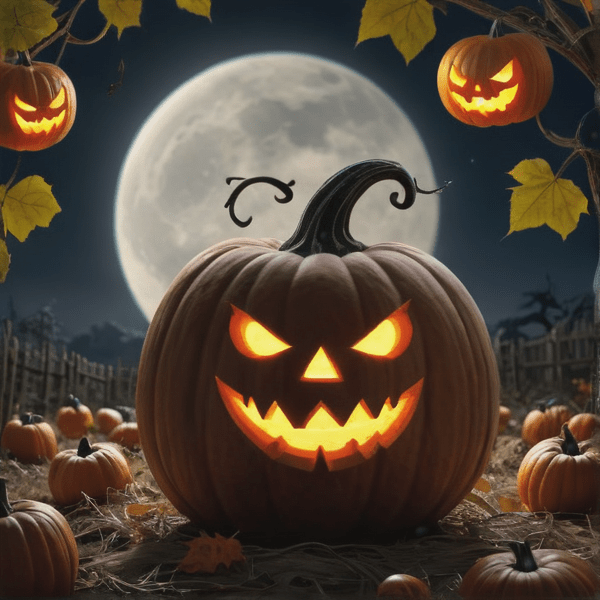
1. From turnips to pumpkins. In Ireland and Scotland, people carved lanterns from turnips to ward off restless spirits like “Stingy Jack.” In North America, the native pumpkin—bigger and easier to carve—became the now-iconic jack-o’-lantern.
2. From pranks to parties. By the early 20th century, vandalism on Halloween sometimes turned costly. Civic groups and women’s clubs promoted community parties, parades, and home decorations to redirect youthful energy from destructive pranks to organized fun. This “civic reform” helped normalize Halloween as a family-friendly event.
Trick-or-Treat: A Mid-20th-Century Standard
Door-to-door customs converged into trick-or-treating by the 1930s–1950s in the U.S. Newspaper references and cartoons popularized the phrase, while post-war suburban design—sidewalks, single-family homes, close-set neighborhoods—made it logistically perfect. Candy manufacturers leaned in, and by the 1970s, fun-size wrappers and themed advertising cemented the ritual.
Costumes, Horror, and the Marketplace
Halloween evolved into a stage for identity-play and collective storytelling:
Costumes: What began as protective disguise became full-spectrum cosplay—from witches and ghosts to superheroes and memes. The line between “scary” and “silly” blurred, reflecting Halloween’s elastic tone.
Horror media: Gothic literature, Universal monster films, slashers, and today’s streaming era shaped Halloween’s aesthetic and expectations—haunted houses, marathons, and franchise tie-ins.
Commercialization: By the 21st century, Halloween became one of the largest retail moments after winter holidays—costumes, décor, candy, yard inflatables, theme-park events, and pop-up stores.
Myths, Morality Panics, and Real Risks
Every mass ritual attracts folklore. Persistent modern myths—tainted candy, razor blades in apples—have far outstripped documented cases. The real, ordinary risks look more like traffic safety, allergen management, and fire hazards. Communities have adapted with trunk-or-treats, labeled allergen-safe treats, reflective costumes, and earlier hours for families.
A Global Patchwork (and Important Distinctions)
Halloween’s global spread tracks media, migration, and retail. It’s now visible from Europe to East Asia, often adapted to local sensibilities. At the same time, it’s crucial to distinguish Halloween from other autumnal days of the dead:
Día de Muertos (Mexico and beyond) centers on family remembrance, home ofrendas (altars), marigolds, and cemetery vigils—its ethos is intimate, devotional, and luminous, even when imagery overlaps.
Obon (Japan) and Chuseok (Korea) have their own ancestral frameworks, timing, and practices.
Where Halloween is adopted abroad, it often coexists with, rather than replaces, local observances—though debates about cultural fit and commercialization are common.
Religion, Heritage, and the Long Debate
Because Halloween braids pagan-adjacent folklore, Christian liturgy, and secular revelry, it has long provoked debate. Some communities embrace it as heritage or harmless fun; others avoid it due to concerns about occult symbolism or commercialization. Many schools and cities land on harvest festivals, costume-optional parades, or opt-in frameworks to balance inclusion with diverse convictions.
Ecology, Ethics, and the Modern Turn
Contemporary concerns reshape the holiday:
Sustainability: Composting pumpkins, DIY/upcycled costumes, LED lighting, and reduced plastic in décor respond to environmental awareness.
Health and inclusion: Teal pumpkins for allergen awareness, sensory-friendly events, accessible routes, and non-food treats open participation to more families.
Digital culture: Social media amplifies creativity—makeup tutorials, yard-haunt walkthroughs, neighborhood maps—while also accelerating trend cycles.
Why Halloween Endures
Halloween survives—and thrives—because it sits at a cultural sweet spot:
It domesticates fear, turning the unknown into play.
It licenses experimentation, letting people try on selves.
It builds neighborhood bonds, one porch-light at a time.
It welcomes remix, absorbing each era’s aesthetics, technologies, and values.
From Samhain’s bonfires to suburban cul-de-sacs to VR haunted experiences, Halloween keeps its core promise: a communal night to face the dark together, laughing under lantern light.
—
Quick Timeline
c. 1st millennium BCE: Celtic Samhain closes the harvest and opens the liminal season.
1st–5th c. CE: Roman Feralia/Pomona observances blend with local customs.
7th–11th c.: Christian All Saints/All Souls anchor remembrance in early November; All Hallows’ Eve emerges.
18th–19th c.: Guising, souling, and bonfires characterize British-Irish Hallowe’ens; turnip lanterns appear.
1840s–1900s: Irish/Scottish immigration spreads Halloween to North America; pumpkins replace turnips.
Early 1900s: Civic reform shifts pranks to parties and parades.
1930s–1950s: Trick-or-treating standardizes; the phrase enters popular use.
1970s–present: Commercialization, horror media synergy, and global diffusion; inclusion and sustainability grow.
Suggested Further Reading (topic-oriented)
Celtic seasonal rites and Samhain
Medieval Allhallowtide (All Saints/All Souls) practices
Folklore of guising, mumming, and souling
Immigration and the Americanization of holidays
Moral panics and urban legends in late-20th-century media
Comparative studies: Halloween vs. Día de Muertos/Obon/Chuseok
 The Eden Protocol
Leave a comment