The Ouija Board: A Gateway to the Spirit World or a Harmless Parlor Game?
The Ouija board has long been a subject of fascination, fear, and debate. Some believe it is a tool for communicating with spirits, while others see it as nothing more than a psychological phenomenon or a harmless board game.
Whether you consider it a portal to the unknown or just a spooky pastime, the Ouija board remains one of the most controversial and intriguing objects in the realm of the supernatural.
The Origins of the Ouija Board
While spirit communication has been practiced for centuries, the modern Ouija board first appeared in the late 19th century, during a time when spiritualism was at its peak.
Key Historical Points:
The Fox Sisters of New York gained fame in the 1840s for their alleged ability to communicate with spirits. Their séances and “spirit rapping” sparked widespread interest in contacting the dead.
In 1890, a businessman named Elijah Bond patented the first commercially produced talking board, which later became known as the Ouija board.
The name “Ouija” supposedly came from the board itself, spelling out its own name when Bond and his friends asked what it should be called.
By 1901, the Ouija board was being mass-produced by the Kennard Novelty Company, later taken over by Parker Brothers and eventually Hasbro, which still owns the rights today.
How the Ouija Board Works
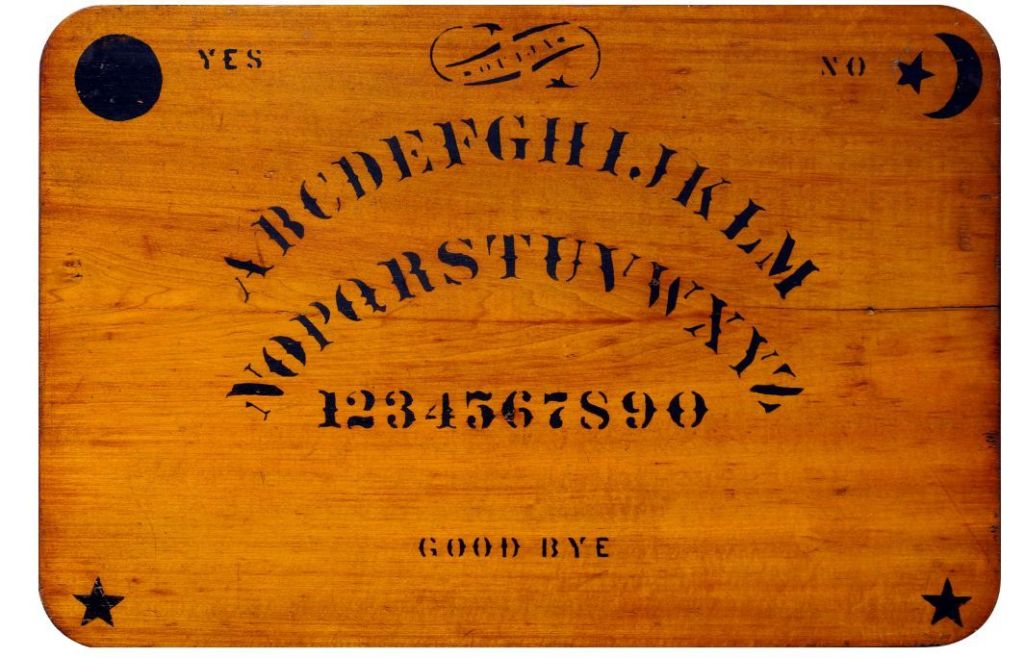
A typical Ouija board consists of:
A flat board with the letters A–Z, numbers 0–9, “YES” and “NO”, and sometimes “GOODBYE”.
A planchette (a small, heart-shaped device) that participants rest their fingers on.
Users ask questions, and the planchette moves to spell out answers. But is this movement truly spirits communicating, or is there a scientific explanation?
Scientific Explanations: The Ideomotor Effect
Skeptics believe that the Ouija board is not supernatural, but rather an example of the ideomotor effect—a psychological phenomenon where small, unconscious muscle movements cause the planchette to move.
Evidence Against the Supernatural Theory:
Blindfolded participants often produce gibberish when using the board, suggesting the movement is subconscious rather than guided by spirits.
Studies show that when people believe they are communicating with a supernatural force, their expectations influence the responses.
Many scientists argue that the Ouija board is simply a psychological tool that reveals the subconscious mind, rather than a means of speaking to the dead.
The Paranormal Perspective: A Gateway to the Unknown
Despite scientific skepticism, many paranormal believers insist that the Ouija board is a real tool for spirit communication.
Common Paranormal Claims:
Spirits can use the board to answer questions, spell names, and provide information.
The board can summon dangerous entities, including malevolent spirits and demons.
Many users report experiencing strange occurrences after a session, such as unexplained noises, objects moving, or eerie visions.
Some even believe that using the Ouija board improperly—such as failing to say “GOODBYE” at the end of a session—can invite unwanted spiritual attachments.
Famous Ouija Board Stories
The Patience Worth Case (1913)
A woman named Pearl Curran claimed to channel a spirit named Patience Worth through the Ouija board. Over time, Patience “dictated” entire books and poems, many of which were historically accurate and highly detailed, leading some to believe Pearl was truly communicating with a ghost.
The Exorcist Connection
The 1973 film The Exorcist was inspired by a real-life case of demonic possession. The victim, a young boy, allegedly became possessed after using a Ouija board, fueling fear and superstition around the board’s dangers.
The Zozo Phenomenon
Many users have reported encounters with an entity named Zozo, a spirit that allegedly appears frequently in Ouija sessions. Those who claim to have contacted Zozo report violent mood swings, disturbing visions, and even physical harm after their encounters.
Ouija Board Safety: Should You Use One?
For those who are curious but cautious, paranormal experts suggest the following Ouija board rules:
1. Never use the board alone—spirits allegedly prey on isolated individuals.
2. Always say “GOODBYE” before ending a session.
3. Avoid asking about death, the future, or specific dates, as this could invite negative energy.
4. Do not use the board in graveyards, abandoned buildings, or locations known for paranormal activity.
5. If the planchette moves toward the four corners of the board, close the session immediately—some believe this is a sign of a negative entity.
While skeptics dismiss these warnings as superstition, those who believe in the supernatural take them very seriously.
Final Thoughts: Paranormal Tool or Psychological Trick?
The Ouija board remains one of the most mysterious and controversial objects in history. Whether it’s a genuine gateway to the spirit world or just a reflection of our own subconscious, it continues to captivate, terrify, and intrigue people worldwide.
And, here, I’ll add a personal experience. It took place in the early 1990’s. I went to a party held by a close friend. The night abruptly ended when a few of us sat around a ouija board and started to ask questions. The question was, “Is anyone here?”
The phone immediately rang. When my friend picked up, no answer. She hung up.
We were all spooked, then asked again. The lights flickered. We were done for the night. Each of us terrified, but left wondering with no answers.
So, is the Ouija board a harmless game, a tool for self-exploration, or something far more sinister?
The only way to know for sure is to ask the board yourself—but be careful what you wish for.
 The Eden Protocol
Leave a comment