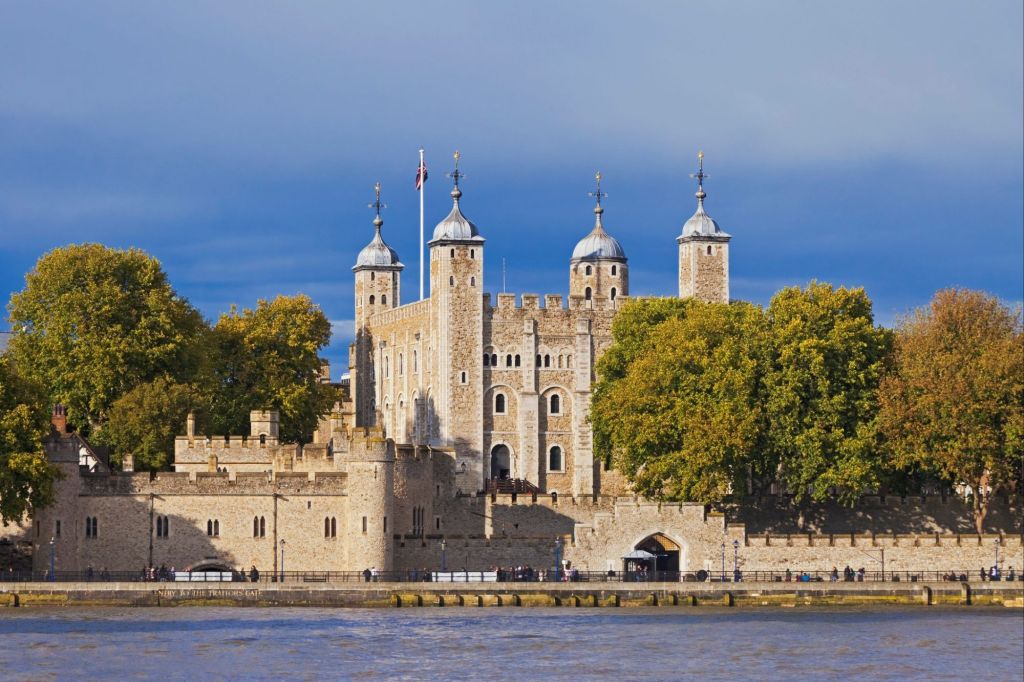
The Tower of London: A Deep Dive into Britain’s Most Haunted Fortress
There are places that feel haunted because they’re dark, old, and drafty—and then there’s the Tower of London, a fortress with nearly a thousand years of accumulated fear, ambition, betrayal, and grief sealed into its stones. It’s not just that people say the Tower is haunted; it’s that the building’s very job description, for centuries, was to hold power and punish those who threatened it. If a haunting is a story that clings to a place, the Tower is practically designed to collect them.
What follows is a deep dive into why the Tower became Britain’s most famous ghost magnet: the history that primed it, the specific corners where legends concentrate, the spirits most often reported, and the psychological reasons a place like this can feel supernaturally alive—whether you believe in ghosts or not.
A fortress built to intimidate
The Tower begins with conquest.
After 1066, William the Conqueror needed London not only secured, but reminded—daily—who was in charge. The central keep, now known as the White Tower, was the fortress’s stern heart: thick walls, limited entry points, dominant sight lines. It wasn’t a palace at first so much as a message carved into the skyline: this is Norman authority, made permanent.
Over time, the Tower evolved into a layered complex of walls, towers, gates, inner wards, and later additions—each era stacking new architecture onto old anxieties. It served many roles:
- Royal residence (especially early on)
- Armory and treasury
- Prison, particularly for the high-born and politically dangerous
- Execution site, symbolically potent because it made punishment visible and public—yet also secretive when needed
Haunting folklore tends to thrive in places with:
- concentrated suffering,
- high stakes,
- secrecy and rumor, and
- strong symbolism.
The Tower has all four.
Why the Tower feels “charged”
Before we talk ghosts, it helps to understand the Tower’s special atmosphere. Visitors describe a kind of pressure there—like the place is watching you back. That sensation comes from a mix of factors:
The geography of dread
The Tower isn’t one building; it’s a maze of thresholds—doors, gates, courtyards, stairwells, passageways. Thresholds are where ghost stories love to live: you step from light into shadow, from open space into stone corridors, from noise into silence.
Layers of story
The Tower is unusually well-documented. The names are known, the dates are known, the accusations and confessions and betrayals are known. When a place has specific victims rather than vague tragedy, the imagination does something powerful: it casts the haunting with real people.
Royal theater
This is crucial. The Tower’s grimness isn’t random violence; it’s state violence—punishment performed as political theater. The emotional residue (if you want to speak metaphorically) isn’t just pain; it’s humiliation, injustice, paranoia, and dread.
Even skeptics admit: if any building can generate “ghost vibes,” it’s one built to make humans feel small and vulnerable under power.
The haunted hotspots inside the Tower
If the Tower is a haunted city, certain neighborhoods dominate the legends.
1) The White Tower
The oldest core is also the most psychologically potent. It’s the “original” Tower: thick Norman walls, narrow stairs, sudden echoes. Reports associated with the White Tower tend to be classic: footsteps, cold spots, unseen presences, and the feeling of being watched.
Because it’s the foundation, it becomes a blank screen for every era’s fears—people project all the Tower’s violence back onto its earliest stone.
2) The Bloody Tower
The name alone does half the haunting work. Whether or not every story attached to it is historically precise, the Bloody Tower has become a symbolic container for one of the Tower’s most famous mysteries: the Princes in the Tower.
This is where the Tower’s haunting isn’t only about tragedy—it’s about uncertainty. Mysteries generate stronger folklore than closed cases because the imagination never stops working. Unresolved stories invite the supernatural as an explanation, or at least as an emotional substitute for justice.
3) Tower Green and the execution narrative
Executions at the Tower weren’t always the public spectacle you picture. Tower Green is infamous because it’s associated with private or semi-private executions, especially those involving high-status prisoners—making the punishment feel both more intimate and more sinister.
The Tower’s haunting reputation is deeply linked to who died there: not anonymous criminals, but queens, courtiers, and heirs. When the victims were close to the crown, the drama intensifies, and so does the legend.
The Tower’s most famous ghosts
Ghost lore at the Tower has a “cast list,” and each spirit functions like a symbol: innocence, ambition, betrayal, doomed youth, broken loyalty. That symbolism is why these stories endure.
Anne Boleyn: the queen who won’t leave
If the Tower has a headline ghost, it’s Anne Boleyn. The legend often depicts her carrying her head under her arm—an image so vivid it almost feels inevitable. She represents the Tower at its most iconic: a place where court politics turn lethal, where a crown can be a trap, where intimacy with power becomes fatal.
Why her story haunts so effectively:
- She’s historically famous and emotionally polarizing
- Her fall feels like a courtroom drama with life-or-death stakes
- Her execution is tied to a very specific place (Tower Green), anchoring the legend to physical ground
Even if you treat the “headless” motif as folklore rather than fact, it’s telling: the Tower’s imagination insists on making her suffering visible.
The Princes in the Tower: the haunting of unanswered questions
The two young princes—Edward V and Richard of Shrewsbury—are less a ghost story than an emotional paradox: innocence caught in a ruthless power struggle, then swallowed by silence. Legends describe apparitions of two children, sometimes seen holding hands, sometimes glimpsed fleetingly on stairs or in corridors.
The true power of this haunting is not gore; it’s absence. The Tower becomes a monument to what cannot be proven, what cannot be undone.
Lady Jane Grey: the tragic “nine days’ queen”
Jane Grey’s legend is ghost-story-perfect: a young person elevated by politics, used as a pawn, and destroyed when the game shifts. Whether or not you believe her spirit appears, the Tower is one of the few places where her story feels physically close—stone and iron holding a life that never really got to begin.
Her haunting symbolizes a specific kind of horror: fate disguised as duty.
The White Lady and other “anonymous” spirits
The Tower’s lore includes figures like a White Lady, and various unnamed presences—guards seeing a figure on a wall walk, vanish, or move where no one should be. These spirits often function like the Tower’s subconscious: not tied to a single headline death, but to the accumulated fear of centuries.
Anonymous ghosts do something important: they suggest the Tower’s tragedy wasn’t exceptional, it was systemic.
The Yeoman Warders, ravens, and ritual: why folklore sticks here
Part of what keeps the Tower’s hauntings alive is that the place is still ritualized.
- Yeoman Warders (Beefeaters) aren’t costumed performers in the modern sense; they embody continuity. When a site retains living traditions, it feels less like a museum and more like a working monument—prime ground for legend.
- The ravens are more than birds; they’re a symbolic “ward” on the kingdom. That kind of mythic rule (“if they leave, the kingdom falls”) adds supernatural flavor to daily reality.
- The Ceremony of the Keys (the nightly locking ritual) reinforces the idea that the Tower’s boundaries are sacred. Boundaries are where hauntings thrive—locked gates, sealed doors, forbidden rooms.
Folklore isn’t just stories told about the Tower. It’s woven into how the Tower is experienced.
The skeptic’s lens: why people see ghosts in the Tower (even if none exist)
You don’t have to believe in spirits to understand why the Tower produces ghost reports.
1) Expectation shapes perception
If you enter a place already primed to think “this is haunted,” your brain does what it always does: it searches for confirming patterns. A creak becomes a footstep. A draft becomes a cold hand. A shadow becomes a figure.
2) The environment is built for misinterpretation
Stone corridors distort sound. Narrow staircases create sudden blind spots. Courtyards amplify echoes. Low light makes depth judgment unreliable. The Tower is essentially an optical and acoustic illusion machine—beautifully, unintentionally.
3) History as “emotional gravity”
In places with heavy histories, people have stronger emotional reactions: awe, dread, sadness, fascination. Those emotions can feel external—like something in the room—because the mind often projects intense feelings outward.
4) Narrative contagion
The more a story is told, the more details become standardized (“a headless queen,” “two children,” “a white-robed woman”), and those details become the template people interpret experiences through. This isn’t dishonesty; it’s how humans make meaning.
In other words: even if the Tower is not haunted, it is a nearly perfect haunting generator.
A place that “haunts” even without ghosts
Here’s the truth at the center of the Tower’s reputation: it doesn’t need literal spirits to haunt you.
The Tower is haunted by:
- the fragility of status,
- the brutality of political survival,
- the way fear becomes policy,
- and how quickly public narratives turn human beings into symbols.
That’s why you can stand on a patch of grass inside those walls and feel time collapse—suddenly imagining a person kneeling there, hearing a crowd that isn’t present, sensing a history that feels more like a presence than a record.
Whether you believe in apparitions or not, the Tower of London is a masterclass in how places retain story pressure—and how that pressure becomes legend.
 The Eden Protocol
Leave a comment