Author: William Pond

  • Across my universe

    CINEVERSE

    Across the Universe

    I’m not a fan of musicals. But this one HIT my soul in the right way.

    Introduction

    Across the Universe is a 2007 jukebox musical film directed by Julie Taymor, built entirely around the songs of The Beatles.  The film is both a love story and a kaleidoscopic trip through the social, political and cultural upheavals of the late 1960s in America. It blends romance, protest, psychedelia, and Beatles nostalgia into one ambitious (some might say uneven) cinematic experience.

    Plot Overview

    The story centers on two young protagonists:

    Jim Sturgess’s character Jude Feeny, a British dock-worker from Liverpool who travels to the United States in search of his father.

    Evan Rachel Wood’s character Lucy Carrigan, an American college girl from a privileged background whose political awakening and personal losses draw her into the counter-culture and anti‐war movement.

    Once in the U.S., Jude connects with Lucy’s brother Max (played by Joe Anderson) and becomes immersed in the vibrant and chaotic world of 1960s New York: psychedelic communal living, anti-Vietnam War protests, music, drugs, free love, and social activism. The romance between Jude and Lucy plays out amid these broader currents, and the film uses 33 (or 34) Beatles compositions to underscore and shape the narrative.

    Style, Music & Visuals

    The film’s most distinctive feature is its musical structure: essentially, the narrative is driven by reinterpretations of Beatles songs, rather than by conventional dialogue or plot mechanics. The songs are used thematically: titles become character names (Lucy, Jude, Max, Sadie, JoJo, etc.) and moments of musical number correspond to key emotional or historic beats.

    Visually, Julie Taymor brings a stylised, almost dream-world aesthetic: bursts of colour, surreal staging, theatrical choreography, and a kind of heightened reality. Some sequences lean strongly into psychedelic abstraction: for example, the “I Am the Walrus” number is elaborately staged and visually hallucinogenic.

    The combination of ambitious visuals, a sometimes fragmentary narrative, and the musical conceit makes the film unequal in structure, but memorable in many individual sequences.

    Themes & Cultural Context

    While at its heart the film is a love story, it also engages with broader themes of its time:

    Counter-culture, Protest & War: The Vietnam War looms large. Lucy’s boyfriend goes to Vietnam; Max is drafted; the characters participate in protests and underground movements.

    Identity, Art & Rebellion: Jude, an outsider from Liverpool, navigates America and tries to find his voice. The film positions art and music as vehicles of change.

    Psychedelia & Transcendence: The visual style and musical structure draw heavily on 1960s psychedelia, altered states, communal ethos, and the search for meaning.

    Romance Amidst Chaos: The blossoming relationship between Jude and Lucy is forged not in calm environs but in a time of upheaval, which gives it both fragility and intensity.

    Given your interests—mythic structuring, historical frameworks, layered symbolism—this film offers fertile ground for analysis: the use of songs as narrative-nodes, character names drawn from Beatles lyrics, the interplay of personal and collective transformation, and the period as a crucible of change.

    Critical Reception & Legacy

    Across the Universe was met with mixed reviews. Many critics praised the visuals, the ambition, the energy of the musical numbers. But some found the plot under-developed and the narrative uneven.  On Rotten Tomatoes, for example, the synopsis notes: “When young British worker Jude… meets… Lucy… their relationship is threatened by social upheaval… the songs of the Beatles provide the sonic framework.”

    Commercially, the film under-performed: it did not recoup near its production costs at box office.  Yet over time it has gained something of a cult status among fans, especially those who resonate with the Beatles’ catalogue or the visual/musical boldness of the piece.

    Why the Film Matters (Especially for You)

    Given your interest in mythic structures, layered narratives, and weaving thematic frameworks into creative work, here are reasons why Across the Universe is worth dissecting:

    1. Names as Symbolism: Characters are named after Beatles songs (Jude, Lucy, Max = Maxwell’s Silver Hammer, Sadie, Prudence, etc) which invites a quasi-mythic reading: the names anchor them in a symbolic ecosystem.

    2. Music as Narrative Engine: Instead of just background songs, the Beatles catalog is the narrative engine. Each number becomes a moment of transformation, reflection, or rupture.

    3. Period as Mythic Setting: The late 60s setting isn’t just historical; it serves as mythic soil—a transformational age where innocence, revolution, art, identity, and politics collide.

    4. Visual-Musical Synesthesia: The visual style often mirrors the music: colours, movement, montage, surreal transitions all accentuate the emotional and symbolic beats.

    5. Romance + Global History: The personal love story is embedded in global-historical change: war, protest, culture, generational conflict. That dialectic—personal ↔ political—is rich for deeper exploration.

    6. Cult trajectory: Its mixed initial reception and later cult appreciation provide a case study in how art may not be fully appreciated in its time, and how thematic depth often finds an audience more slowly.

    Potential Angles for Your Creative/Research Work

    Here are a few ways you might engage with or draw inspiration from Across the Universe:

    Character naming & symbolism: You might map how each name in the film correlates to a Beatles song, then derive symbolic resonances (e.g., Lucy & Lucy in the Sky with Diamonds, Jude & Hey Jude).

    Music triggers plot beats: Chart the film’s 33/34 songs and see how each functions as exposition, turning point, emotional climax, or thematic echo.

    Period-myth lens: Analyze how the film uses the 1960s not just as setting but as mythic template—youth revolution, war trauma, psychedelic exploration, free love, identity politics. Then consider your own narratives: how might you use a distinct historical moment as a mythic template in your comic/book/story?

    Visual metaphor & style: Consider how Taymor uses colour, movement, staging to reflect inner states (psychedelia, revolution, love, loss). You might extract visual motifs for your own storyboard or comic layout.

    Romance amidst revolution: The pairing of a working-class outsider with a privileged American girl becomes symbolic of trans-national, trans-class, trans-cultural union; and this union is tested by war and politics. In your work, the trope of personal relationships under the pressure of world-events is one you’ve touched on: you might borrow the structural interplay.

    Jukebox/cover narrative device: The idea of reinterpreting known songs to tell a different story—could be a model for your own narrative layering: known texts/songs/myths repurposed into new story.

    Cult evolution: The film’s journey from commercial failure to cult favourite is interesting in itself. How does time, audience reception, reinterpretation affect how we view works? This is relevant if you’re weaving mythic/historic threads into speculative narratives: initial reception might differ wildly from legacy.

    Criticisms & Caveats

    No film is without its flaws, and Across the Universe has several that are worth noting (and that might help you refine how you adapt or avoid similar pitfalls):

    Narrative loose-ends: Some critics felt the plot was thin, more a string of musical set-pieces than a deeply integrated story.

    Uneven pacing: The transitions between musical number, dialogue, and montage can sometimes feel abrupt or disconnected—while visually dazzling, the emotional continuity sometimes suffers.

    The “gimmick” risk: Because the film is built so overtly around Beatles songs, some sequences feel constrained by the need to accommodate a specific song rather than organically arise from story or character.

    Commercial vs. artistic tension: The film reportedly faced studio pressures to cut its queer, political, or psychedelic elements.  This tension between artistic integrity and commercial viability is always a factor in ambitious works.
    -Across the Universe is a rich, provocative, visually bold film that uses the Beatles catalogue as both the score and skeleton for a mythic-tinged love story set against a backdrop of historical upheaval. Its marriage of romance, revolution, music and psychedelia makes it a fascinating text—especially if you’re interested in how story, symbol and history can intertwine.

    Across the Universe is a rich, provocative, visually bold film that uses the Beatles catalogue as both the score and skeleton for a mythic-tinged love story set against a backdrop of historical upheaval. Its marriage of romance, revolution, music and psychedelia makes it a fascinating text—especially if you’re interested in how story, symbol and history can intertwine.

    For your purposes—whether comic book writing, speculative world-building, mythic research, or narrative design—the film offers many touchpoints: naming, song as structure, period as myth, visual metaphor, and the dialectic of personal story + global change.

  • HALLOWEEN

    The Origins and Legacy of Halloween

    Halloween sits at the intersection of ancient seasonal rites, medieval Christian calendars, immigrant folklore, and modern pop culture. It didn’t spring from a single source; it’s a palimpsest—layered traditions that different communities adapted to their own needs and imaginations over centuries.

    Celtic Roots: Samhain and the “Thin” Time

    The oldest recognizable ancestor of Halloween is Samhain (pronounced “SAH-win”), an end-of-harvest festival observed by Celtic peoples in Ireland, Britain, and parts of Gaul roughly 2,000 years ago. Samhain marked the transition from light to dark seasons. Herds returned, accounts were settled, and communities prepared for winter.

    Cosmologically, Samhain was a liminal time: boundaries between worlds were thought to weaken, allowing spirits—ancestral and otherwise—to wander. Fires, feasts, and protective rituals were common. Disguise and mumming (costumed visiting or performance) appear in later sources and folk survivals, reflecting both reverence and mischief in how the living met the uncanny.

    Roman and Christian Overlays

    As Rome absorbed Celtic territories, elements of Roman autumn observances—Feralia (honoring the dead) and the festival of Pomona (associated with fruit and orchards)—likely mingled with local customs. Apples, bobbing games, and divinatory uses of fruit may echo this synthesis.

    Medieval Christianity layered its own liturgical framework on top. By the early medieval period, All Saints’ Day (1 November) and All Souls’ Day (2 November) honored the holy dead and prayed for all departed souls. The evening before, All Hallows’ Eve (Hallow-e’en), picked up folk practices tied to remembrance, protection, and charity. Customs like souling—the poor visiting homes to receive “soul cakes” in exchange for prayers—created an early template for door-to-door exchange that later becomes trick-or-treating.

    Guising, Mischief, and Community Norms

    Across Scotland, Ireland, and parts of northern England, guising—children or young adults going house to house in costume to perform a song, joke, or trick for food or coins—was established by the 18th–19th centuries. Halloween also became a sanctioned night of misrule: gates removed, carts re-positioned, chimneys stopped—mischief that communities tolerated as a pressure valve for social order. Bonfires remained a hallmark in many regions.

    Crossing the Atlantic: Immigration and Reinvention

    The 19th-century waves of Irish and Scottish immigration brought Halloween customs to North America, where they mixed with local traditions and the rhythms of industrial, urban life. Two pivotal changes happened:

    1. From turnips to pumpkins. In Ireland and Scotland, people carved lanterns from turnips to ward off restless spirits like “Stingy Jack.” In North America, the native pumpkin—bigger and easier to carve—became the now-iconic jack-o’-lantern.

    2. From pranks to parties. By the early 20th century, vandalism on Halloween sometimes turned costly. Civic groups and women’s clubs promoted community parties, parades, and home decorations to redirect youthful energy from destructive pranks to organized fun. This “civic reform” helped normalize Halloween as a family-friendly event.

    Trick-or-Treat: A Mid-20th-Century Standard

    Door-to-door customs converged into trick-or-treating by the 1930s–1950s in the U.S. Newspaper references and cartoons popularized the phrase, while post-war suburban design—sidewalks, single-family homes, close-set neighborhoods—made it logistically perfect. Candy manufacturers leaned in, and by the 1970s, fun-size wrappers and themed advertising cemented the ritual.

    Costumes, Horror, and the Marketplace

    Halloween evolved into a stage for identity-play and collective storytelling:

    Costumes: What began as protective disguise became full-spectrum cosplay—from witches and ghosts to superheroes and memes. The line between “scary” and “silly” blurred, reflecting Halloween’s elastic tone.

    Horror media: Gothic literature, Universal monster films, slashers, and today’s streaming era shaped Halloween’s aesthetic and expectations—haunted houses, marathons, and franchise tie-ins.

    Commercialization: By the 21st century, Halloween became one of the largest retail moments after winter holidays—costumes, décor, candy, yard inflatables, theme-park events, and pop-up stores.

    Myths, Morality Panics, and Real Risks

    Every mass ritual attracts folklore. Persistent modern myths—tainted candy, razor blades in apples—have far outstripped documented cases. The real, ordinary risks look more like traffic safety, allergen management, and fire hazards. Communities have adapted with trunk-or-treats, labeled allergen-safe treats, reflective costumes, and earlier hours for families.

    A Global Patchwork (and Important Distinctions)

    Halloween’s global spread tracks media, migration, and retail. It’s now visible from Europe to East Asia, often adapted to local sensibilities. At the same time, it’s crucial to distinguish Halloween from other autumnal days of the dead:

    Día de Muertos (Mexico and beyond) centers on family remembrance, home ofrendas (altars), marigolds, and cemetery vigils—its ethos is intimate, devotional, and luminous, even when imagery overlaps.

    Obon (Japan) and Chuseok (Korea) have their own ancestral frameworks, timing, and practices.

    Where Halloween is adopted abroad, it often coexists with, rather than replaces, local observances—though debates about cultural fit and commercialization are common.

    Religion, Heritage, and the Long Debate

    Because Halloween braids pagan-adjacent folklore, Christian liturgy, and secular revelry, it has long provoked debate. Some communities embrace it as heritage or harmless fun; others avoid it due to concerns about occult symbolism or commercialization. Many schools and cities land on harvest festivals, costume-optional parades, or opt-in frameworks to balance inclusion with diverse convictions.

    Ecology, Ethics, and the Modern Turn

    Contemporary concerns reshape the holiday:

    Sustainability: Composting pumpkins, DIY/upcycled costumes, LED lighting, and reduced plastic in décor respond to environmental awareness.

    Health and inclusion: Teal pumpkins for allergen awareness, sensory-friendly events, accessible routes, and non-food treats open participation to more families.

    Digital culture: Social media amplifies creativity—makeup tutorials, yard-haunt walkthroughs, neighborhood maps—while also accelerating trend cycles.

    Why Halloween Endures

    Halloween survives—and thrives—because it sits at a cultural sweet spot:

    It domesticates fear, turning the unknown into play.

    It licenses experimentation, letting people try on selves.

    It builds neighborhood bonds, one porch-light at a time.

    It welcomes remix, absorbing each era’s aesthetics, technologies, and values.

    From Samhain’s bonfires to suburban cul-de-sacs to VR haunted experiences, Halloween keeps its core promise: a communal night to face the dark together, laughing under lantern light.

    Quick Timeline

    c. 1st millennium BCE: Celtic Samhain closes the harvest and opens the liminal season.

    1st–5th c. CE: Roman Feralia/Pomona observances blend with local customs.

    7th–11th c.: Christian All Saints/All Souls anchor remembrance in early November; All Hallows’ Eve emerges.

    18th–19th c.: Guising, souling, and bonfires characterize British-Irish Hallowe’ens; turnip lanterns appear.

    1840s–1900s: Irish/Scottish immigration spreads Halloween to North America; pumpkins replace turnips.

    Early 1900s: Civic reform shifts pranks to parties and parades.

    1930s–1950s: Trick-or-treating standardizes; the phrase enters popular use.

    1970s–present: Commercialization, horror media synergy, and global diffusion; inclusion and sustainability grow.

    Suggested Further Reading (topic-oriented)

    Celtic seasonal rites and Samhain

    Medieval Allhallowtide (All Saints/All Souls) practices

    Folklore of guising, mumming, and souling

    Immigration and the Americanization of holidays

    Moral panics and urban legends in late-20th-century media

    Comparative studies: Halloween vs. Día de Muertos/Obon/Chuseok

  • THE CANDY MAN

    PIXY STICKS

    “The Candy Man”: The Texas Halloween poisoning of 1974 — what really happened

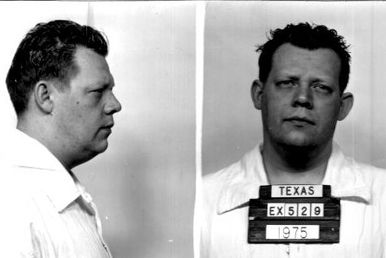
    On Halloween night, October 31, 1974, eight-year-old Timothy O’Bryan of Deer Park/Pasadena, Texas, died less than an hour after tasting a “Giant Pixy Stix.” Investigators soon concluded the candy had been laced with potassium cyanide by his father, Ronald Clark O’Bryan, in a scheme to collect life-insurance money. The case horrified the country and cemented a popular fear about “poisoned Halloween candy,” even though it was not a random attack by a stranger.

    The people and pressures behind the crime

    Ronald O’Bryan was a 30-year-old optician with mounting debts and a faltering work history. In 1974 he earned about $150 a week and was behind on loans and car payments. In the months leading up to Halloween he quietly stacked multiple life-insurance policies on his two children—$10,000 policies tied to a bank club and additional $20,000 policies on each child taken out in late September/early October—while carrying little or no insurance on himself.

    O’Bryan had also been asking around about cyanide. Colleagues and a friend from a chemical company later testified he’d discussed fatal dosages, and a Houston scientific supplier remembered O’Bryan inquiring about buying cyanide (he balked when told the smallest container was five pounds).

    Halloween night: five Pixy Stix

    Despite rain on October 31, O’Bryan took his two children trick-or-treating with a neighbor, Jim Bates, and Bates’s two kids. At one darkened house where no one came to the door, the children ran ahead; O’Bryan later rejoined the group holding five long Pixy Stix, claiming the occupant had answered late and handed them out. He distributed one to each of the four children and gave the fifth to a boy from his church. That night Timothy asked for candy before bed; the Pixy Stix tasted bitter, and within minutes he began vomiting and convulsing. He died en route to the hospital.

    An autopsy quickly confirmed cyanide. Police retrieved the remaining four Pixy Stix before any other child ate them. (A Washington Post report noted prosecutors said O’Bryan had “spike[d] five 22-inch plastic tubes,” and only Timothy consumed his.)

    From “mystery neighbor” to prime suspect

    At first O’Bryan said he couldn’t recall the exact house. Under pressure, he pointed police to the darkened home of Courtney Melvin, an air-traffic controller. But Melvin had been at work until nearly 11 p.m., and more than 200 witnesses corroborated the alibi; the Melvin family had stopped answering the door when they ran out of candy early in the evening and had never seen O’Bryan or Bates that night. Investigators’ focus swung decisively back to O’Bryan.

    Several other facts tightened the net. The Texas Court of Criminal Appeals summarized extensive evidence of premeditation and motive: the fresh policies on the children, O’Bryan’s search for cyanide sources, and even his calls to an insurer and bank the morning after Timothy’s death asking how to collect. The court also emphasized that O’Bryan handed out four additional poisoned sticks—his daughter, two neighbor children, and another child from church—to disguise the targeted murder of his son as a random Halloween poisoning.

    Trial, conviction, and execution

    O’Bryan was arrested on November 5, 1974, indicted for capital murder and four counts of attempted murder, and tried in Houston in May–June 1975. The jury deliberated only minutes before convicting and sentencing him to death. On appeal in 1979, Texas’s high criminal court affirmed, detailing the calculated nature of the offense and O’Bryan’s efforts to frame an innocent neighbor. Federal courts later denied habeas relief.

    After last-minute appeals failed, O’Bryan was executed by lethal injection in Huntsville in the early hours of March 31, 1984 (Texas Department of Criminal Justice records date the execution as March 30, reflecting administrative timing; contemporary reporting places the injections just after midnight).

    Forensics note: the cyanide and the candy

    The Harris County medical examiner’s office determined cyanide in the Pixy Stix and in Timothy’s body; Texas appellate records also describe O’Bryan’s months-long curiosity about cyanide sources and lethal doses. Contemporary coverage and later summaries describe the “Giant Pixy Stix” as long plastic tubes of powdered candy that had been opened, refilled near the top with cyanide, and resealed—a ruse that fooled a child but drew no attention at the door.

    What the case did—and didn’t—prove about Halloween candy

    The “Candy Man” killing helped ignite and then perpetuate the dread of anonymous Halloween poisoners. Yet sociologist Joel Best, who has tracked “Halloween sadism” reports since the 1980s, has never found a verified case of a child killed or seriously hurt by a randomly distributed, tampered trick-or-treat candy. Where deaths were initially blamed on “poisoned candy,” investigations have traced them to unrelated causes, accidents, hoaxes—or, as in Texas in 1974, a family member committing murder. O’Bryan’s crime, in other words, was real and monstrous, but it was not the urban-legend scenario of a stranger targeting random kids.

    Key dates

    Oct 31, 1974: Timothy O’Bryan dies after ingesting cyanide from a Pixy Stix given by his father during trick-or-treating.

    Nov 5, 1974: Ronald O’Bryan is arrested; later indicted for capital murder and attempted murders.

    June 3, 1975: Jury convicts and sentences O’Bryan to death.

    Sept 26, 1979: Texas Court of Criminal Appeals affirms conviction and sentence.

    Mar 31, 1984 (early a.m.): O’Bryan executed in Huntsville after final appeals fail. (TDCJ lists Mar 30; contemporaneous reporting places execution just after midnight Mar 31.)

    Sources & further reading

    O’Bryan v. State, 591 S.W.2d 464 (Tex. Crim. App. 1979) — appellate opinion summarizing evidence of motive, planning (insurance), and cyanide inquiries.

    Texas Dept. of Criminal Justice — death-row record and last statement of Ronald C. O’Bryan.

    Washington Post (Mar. 31, 1984) — contemporaneous report on execution and trial highlights.

    Justia/Law Resource federal appeals — habeas decisions referencing the case history.

    KPRC-TV trial footage (Texas Archive of the Moving Image) — local TV coverage from 1975.

    Court record refuting the “mystery neighbor” — testimony clearing homeowner Courtney Melvin.

    Joel Best, University of Delaware — scholarship debunking “poisoned Halloween candy” urban legends.

    Bottom line

    The “Candy Man” killing was a calculated filicide for insurance money, disguised as a random Halloween poisoning by handing out additional tainted candies. It became a cautionary tale that changed how many parents think about trick-or-treating, but the broader fear of anonymous poisoners has not been borne out by evidence.

  • HALLOWEEN HORRORS

    Here’s a sober deep-dive on Halloween’s darkest real-world crimes—focusing on what happened, why these cases seared themselves into public memory, and what patterns and myths they’ve fueled. I’ll avoid gory detail while keeping the historical record clear and well-sourced.

    Why Halloween crimes loom so large

    Halloween blends anonymity (costumes, masks), routine door-to-door contact, and late-night parties—ingredients that make certain offenses easier to attempt and harder to attribute. Even so, the holiday’s reputation is shaped more by a few infamous cases and persistent myths than by any proven, annual crime wave.

    The benchmark case: the “Candy Man” poisoning (Texas, 1974)

    No Halloween crime has reverberated like Ronald Clark O’Bryan’s murder of his eight-year-old son with cyanide-laced Pixy Stix to collect life-insurance money. The crime—committed during trick-or-treating in Deer Park, Texas—cemented decades of parental fear about tainted candy, despite its rarity. O’Bryan was convicted and executed in 1984. Contemporary court records and retrospectives confirm the plot, the motive, and the enduring cultural impact.

    A home-invasion double murder in “wine country” (Napa, 2004)

    Just after Halloween night in Napa, California, roommates Leslie Mazzara and Adriane Insogna were stabbed to death in their home while a third roommate escaped and called 911. The case rattled a community not known for violent crime. Eleven months later, Eric Matthew Copple—who knew one victim through his future wife—turned himself in and later pleaded guilty to two counts of first-degree murder; he received life without parole. Local reporting and national coverage detail the break in the case (including cigarette-butt DNA), the plea, and sentencing.

    The Liske family murders (Ohio, 2010)

    On Halloween morning in 2010 near Toledo, William “BJ” Liske killed his father, stepmother, and stepbrother at their homes—an intrafamilial massacre that shook the region. Coverage from the local Sandusky Register reconstructed the timeline; the case appears routinely in Halloween-crime roundups because of its date and brutality.

    The “Trick-or-Treat” doorstep killing (Los Angeles, 1957)

    Beauty-salon owner Peter Fabiano was shot dead at his front door late on Halloween by a costumed assailant who blended in with trick-or-treaters. Investigators ultimately tied the plot to Joan Rabel and Goldyne Pizer; both pleaded guilty to second-degree murder. The case endures as an archetype of a killer using Halloween’s disguises to get close to a victim.

    A serial-killer outlier on Halloween night (Los Angeles, 1979)

    The “Toolbox Killers” (Lawrence Bittaker and Roy Norris) abducted 16-year-old Shirley Ledford after a Halloween party on Oct. 31, 1979—their final known murder in a months-long spree. Official records and court opinions establish the date and the sequence of events; the case is often cited to show how the holiday’s late-night mobility can intersect with predatory offenders. (Note: accounts include disturbing details; the citation here sticks to legal records.)

    An unsolved Chelsea double murder (New York City, 1981)

    Photographer Ronald Sisman, 39, and student Elizabeth Platzman, 20, were found beaten and shot in Sisman’s apartment on Halloween night. The ransacked scene fueled persistent (but unproven) theories—including rumored links to David Berkowitz (“Son of Sam”). The case remains officially unsolved, periodically revisited in true-crime media.

    A Halloween-party disappearance turned homicide (Tennessee, 2011)

    Karen Swift vanished after a Halloween party; six weeks later, her body was found, and the case dragged on for years. Her estranged husband was charged in 2022; in 2024 he was acquitted on murder but faced a mistrial on a lesser charge, with proceedings continuing into 2025. The timeline highlights how Halloween social dynamics can complicate early investigations.

    Patterns, myths, and takeaways

    1) The poisoned-candy myth vs. reality.
    The O’Bryan case is the outlier that proved the fear possible—but not common. Public-health reviews and journalism over decades have found virtually no verified cases of a stranger poisoning random Halloween candy; the 1974 murder was a targeted filicide disguised as a random threat. Nonetheless, it permanently changed parental behavior (e.g., candy checks, supervised routes).

    2) Halloween’s anonymity matters—but so do relationships.
    Several headline cases involved offenders who knew the victims (Napa 2004; O’Bryan 1974), undermining the idea that Halloween dangers are chiefly from anonymous strangers.

    3) Late-night mobility and parties increase exposure.
    Ledford’s abduction after a party and numerous post-party incidents underscore risk factors that aren’t unique to Halloween but can peak then: nighttime travel, intoxication, and crowded social calendars.

    4) Media amplification turns rare events into cultural archetypes.
    The Fabiano “trick-or-treat slaying” and the “Candy Man” poisoning became templates in popular imagination—stories retold each October and often generalized into broad safety warnings.

    Practical safety notes (without sensationalism)

    Supervise young trick-or-treaters; stick to known neighborhoods and check that commercially sealed candy is intact. (The iconic case involved tampering by a parent, not strangers—but basic vigilance still helps.)

    For teens and adults, plan transport before parties; travel in groups; share live locations; and use verified rides. (Late-night returns were factors in multiple cases above.)

    At home, good lighting, cameras/doorbell video, and answering the door while keeping distance help when you can’t see faces clearly—especially late after the main rush. (Fabiano’s case is a historical outlier, but the tactic—mask plus doorstep approach—is a known risk.)

    Bottom line

    Halloween does not inherently “cause” violent crime—but its masks, motion, and myths create conditions that certain offenders have exploited. A handful of notorious cases—the O’Bryan poisoning in 1974, the Napa killings in 2004, the Liske murders in 2010, the Fabiano doorstep slaying in 1957, the Ledford abduction in 1979, and the Sisman/Platzman double murder in 1981—explain why the holiday’s funhouse mirror also reflects some of true crime’s most enduring nightmares.

  • ROBERT THE DOLL

    PARANORMAL

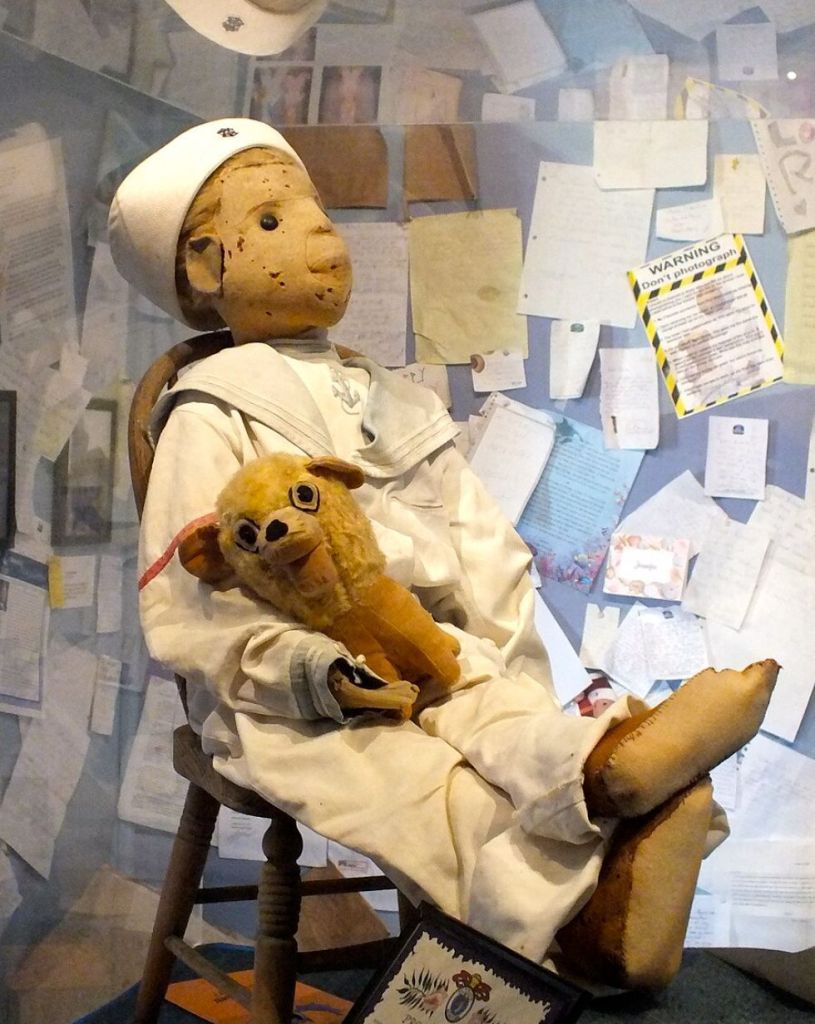
    Robert the Doll: The Terrifying Tale of Key West’s Haunted Figure

    Among the world’s most infamous haunted objects, Robert the Doll holds a sinister reputation. Housed in the Fort East Martello Museum in Key West, Florida, Robert is said to be cursed, responsible for bringing misfortune, accidents, and even death to those who mock or disrespect him. Unlike Hollywood’s portrayal of haunted dolls like Annabelle, Robert’s real-life legend is even more unsettling, with countless eerie stories surrounding him.

    The Origins of Robert the Doll

    Robert Eugene Otto, often called Gene, was a young boy living in Key West in the early 1900s. According to legend, Robert the Doll was gifted to Gene by a Bahamian servant, who may have practiced voodoo or dark magic.

    Soon after receiving the doll, Gene’s parents noticed strange occurrences:

    Gene was often heard speaking to Robert—and a deep, unknown voice would respond.

    The family reported objects moving on their own and unexplained giggling echoing through the house.

    Gene would blame mysterious misfortunes on Robert, often saying, “Robert did it.”

    Neighbors claimed to see Robert moving from window to window when no one was home.

    A Lifelong Connection

    Gene grew up but kept Robert by his side, treating him as a lifelong companion. When he became an artist and moved into the Otto family mansion, he even gave Robert his own room in the attic, furnished like a small bedroom.

    Visitors to the house reported hearing footsteps, eerie laughter, and whispering from Robert’s attic room. Some claimed the doll’s expression would change, or that it would appear in different locations despite no one moving it.

    Even after Gene’s death in 1974, Robert’s eerie legacy continued.

    Robert the Doll’s Museum Home and the Cursed Letters

    After Gene’s passing, Robert was donated to the Fort East Martello Museum, where he remains on display inside a glass case. Despite being locked away, Robert’s haunted reputation grew even stronger.

    The museum staff and visitors report:

    Cameras malfunctioning or breaking when trying to take his picture.

    Bad luck, car accidents, job losses, and illnesses affecting those who mock him.

    Hundreds of letters sent to Robert each year—many from people begging for forgiveness, believing they had been cursed after disrespecting him.

    The letters, which can still be seen at the museum, contain apologies from people who mocked or doubted his powers, hoping to break the streak of misfortune.

    Skepticism and Theories

    While many believe Robert is truly haunted, skeptics suggest alternative explanations:

    Psychological Influence: The power of suggestion may make people believe they are experiencing bad luck after disrespecting Robert.

    Childhood Imagination: Gene may have had an active imagination, attributing accidents to his doll.

    Museum Myth-Making: Some believe the legend is exaggerated for tourism, as Key West embraces its spooky reputation.

    Robert’s Lasting Legacy

    Whether one believes in Robert’s supernatural power or not, his eerie presence continues to fascinate and terrify. Unlike many haunted dolls, Robert is not locked away in a secret room—he remains on public display, watching over visitors who dare to approach.

    One thing is clear: If you ever visit Robert at the Fort East Martello Museum, it’s best to be polite, ask for permission before taking his picture, and never mock him—or risk becoming another name on his long list of cursed believers.

  • The Abduction of Amber Hagerman

    UNSOLVED

    Arlington Police

    ARLINGTON GIRL REMEMBERED: THE ABDUCTION AND LEGACY OF AMBER HAGERMAN

    January 13, 1996 — Arlington, Texas

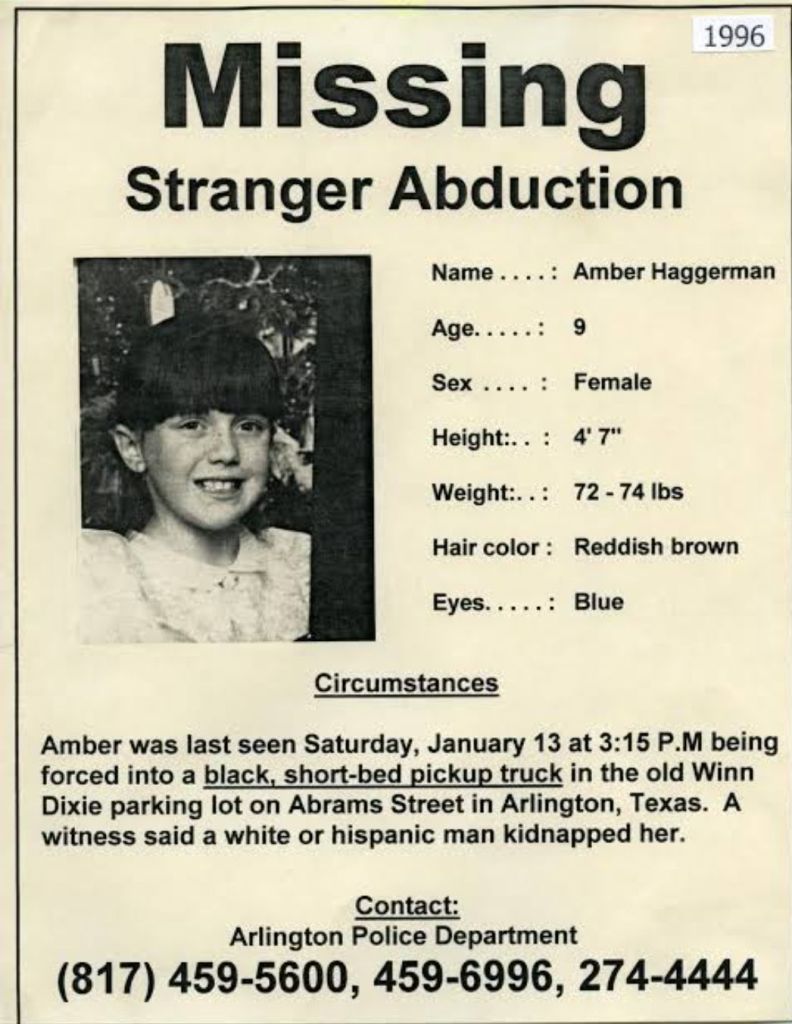
    In the quiet suburb of Arlington, Texas, an ordinary Saturday afternoon turned into a national tragedy when 9-year-old Amber Hagerman was abducted in broad daylight. Riding her pink bicycle near the Winn-Dixie parking lot just a few blocks from her grandparents’ home, Amber’s joy was shattered when a black pickup truck pulled up and a man forcibly took her.

    A witness, a retired machinist, immediately called 911 after seeing the horrifying scene unfold. But despite a rapid police response and a community search effort that stretched across the Dallas–Fort Worth area, Amber’s body was found four days later in a creek bed. She had been brutally murdered. Her killer has never been identified.

    Amber was described by her family as adventurous, kind-hearted, and full of dreams. She loved riding her bike and hoped to become a teacher. The shock of her death resonated far beyond Texas, capturing national attention and prompting widespread outrage. But from that grief emerged something powerful: the AMBER Alert system.

    From Tragedy to National Safety Net

    Named in Amber’s honor—though the acronym now officially stands for America’s Missing: Broadcast Emergency Response—the AMBER Alert was born from the determination of her family, local broadcasters, and law enforcement to prevent such tragedies from happening again. Just months after Amber’s death, Dallas-Fort Worth broadcasters teamed up with law enforcement to develop the first alert system.

    It quickly spread across states and, by 2003, became a federally coordinated program. Today, AMBER Alerts are sent instantly through cell phones, radio, television, and highway signs when a child is abducted and believed to be in danger.

    As of this writing, more than 1,100 children have been recovered thanks to the system bearing Amber’s name.

    An Unfinished Story

    Though Amber’s name lives on through a system that saves lives, her own case remains unsolved nearly three decades later. Arlington police continue to pursue leads. “We will never stop looking for justice for Amber,” a detective from the Arlington Police Department said at a memorial held earlier this year.

    Her mother, Donna Williams, still hopes for closure. “Someone knows something,” she said in an emotional public appeal. “Please, if you remember anything, come forward.”

    Amber Hagerman’s story is one of deep sorrow but also of lasting legacy. Her life may have been short, but her memory continues to protect the lives of countless others.

    If you have any information about the abduction or murder of Amber Hagerman, please contact Arlington Police Department or Crime Stoppers. You can remain anonymous.

  • UFOs Through the Ages

    EXTRATERRESTRIAL

    UFO Encounters Through the Ages: From Ancient Sightings to Modern Mysteries

    The Truth Behind Humanity’s Most Mysterious Aerial Encounters

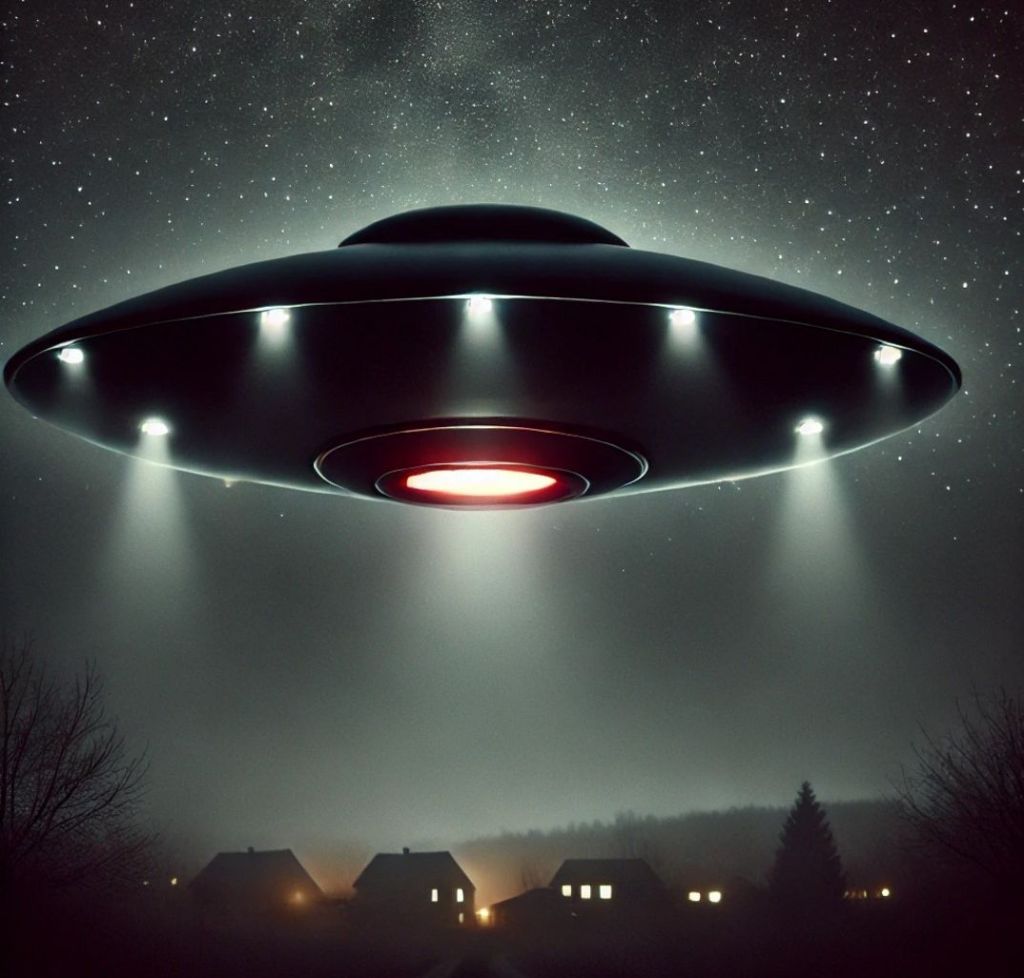
    For centuries, unexplained objects in the sky have mystified people around the world. From ancient texts describing fiery chariots in the heavens to modern military encounters with unidentified craft, reports of Unidentified Flying Objects (UFOs) have remained consistent.

    As governments and scientists begin taking UFO disclosures more seriously, it’s time to examine some of the earliest and most notable UFO encounters in history—events that continue to fuel speculation about whether we are alone in the universe.

    Ancient UFO Sightings: Gods, Chariots, and Cosmic Visitors?

    Long before the modern era, ancient civilizations documented strange aerial phenomena, often linking them to divine beings or celestial omens.

    1. The Tulli Papyrus (Egypt, 15th Century BCE)

    This ancient Egyptian document, allegedly discovered in the Vatican archives, describes “circles of fire” moving through the sky, emitting a bright glow and a foul odor.

    Pharaoh Thutmose III reportedly witnessed these “celestial disks,” which eventually ascended and disappeared into the heavens.

    2. The Roman Emperor’s UFO Encounter (Rome, 218 BCE – 90 CE)

    Roman historians, including Livy and Plutarch, recorded mysterious flying shields, torches, and glowing spheres appearing in the skies.

    In 74 BCE, Roman soldiers reportedly saw a “burning golden disk” descend between two warring armies, stopping their battle.

    3. The Japan UFO Scrolls (1180 CE)

    An ancient Japanese document describes a shining, flying object seen over Kyoto.

    Witnesses said the “ship” made sudden maneuvers and disappeared into the night sky.

    Were these spiritual visions, atmospheric anomalies, or genuine alien encounters? The descriptions bear uncanny similarities to modern UFO sightings.

    Early Modern UFO Sightings: The First Encounters in Recorded History

    4. The Nuremberg UFO Battle (1561, Germany)

    On April 14, 1561, citizens of Nuremberg reported seeing a massive aerial battle involving cylindrical craft, spheres, and crosses in the sky.

    A woodcut illustration from the time depicts strange flying shapes engaged in what appeared to be combat.

    Some historians suggest it was a meteor shower or atmospheric phenomenon, but others believe it was a mass sighting of extraterrestrial craft.

    5. The Hull Airship Mystery (1801, England)

    Residents of Hull, England witnessed a huge, luminous orb hovering in the sky, described as a spinning ball of fire emitting light beams.

    The sighting was widely reported in local newspapers, making it one of the earliest documented UFO encounters in modern history.

    The UFO Wave of the 20th Century: The Birth of the Modern Phenomenon

    6. The Aurora, Texas UFO Crash (1897, USA)

    Decades before Roswell, a mysterious airship allegedly crashed in Aurora, Texas.

    Reports claim the wreckage contained a small humanoid body, described as “not of this world.”

    A local cemetery is rumored to contain the buried remains of the extraterrestrial pilot, though no exhumation has confirmed the story.

    7. The Foo Fighters of WWII (1940s, Global)

    Allied and Axis pilots during World War II reported seeing “Foo Fighters”—mysterious glowing orbs that followed and outmaneuvered aircraft.

    The objects displayed intelligent control, leading to speculation they were either secret enemy technology or extraterrestrial craft.

    8. The Roswell Incident (1947, USA)

    In July 1947, a “flying disk” allegedly crashed near Roswell, New Mexico.

    The U.S. military quickly retrieved the wreckage, claiming it was a weather balloon—a story many believe was a cover-up for an extraterrestrial craft.

    Declassified government documents have since suggested something unusual was recovered, fueling decades of speculation.

    9. The Washington D.C. UFO Invasion (1952, USA)

    In July 1952, multiple UFOs appeared over the White House and Capitol Building, tracked by radar and seen by pilots.

    The U.S. Air Force launched fighter jets to intercept, but the UFOs displayed unbelievable speeds and agility, evading pursuit.

    The government’s official explanation was “temperature inversions,” but many dismissed this claim.

    Recent and Military UFO Encounters: The Evidence Grows

    10. The Rendlesham Forest Incident (1980, UK)

    Often called “Britain’s Roswell,” U.S. military personnel stationed at RAF Bentwaters witnessed a triangular craft land in Rendlesham Forest.

    Multiple officers described symbols on the craft, radiation spikes, and telepathic messages from the unknown object.

    11. The Phoenix Lights (1997, USA)

    On March 13, 1997, thousands of witnesses across Arizona reported a massive, V-shaped UFO moving silently over the state.

    The government explanation was military flares, but eyewitnesses—including the Arizona governor—disagreed.

    12. The USS Nimitz UFO Incident (2004, USA)

    U.S. Navy pilots from the USS Nimitz carrier group encountered Tic-Tac-shaped UFOs off the coast of California.

    Declassified military footage (FLIR1 video) shows the craft performing impossible maneuvers, with no visible propulsion system.

    In 2020, the Pentagon officially acknowledged the videos, marking a turning point in government transparency on UFOs.

    Conclusion: The UFO Mystery Continues

    From ancient records to modern military encounters, UFO sightings have persisted throughout human history. Whether they are extraterrestrial visitors, secret government technology, or unknown natural phenomena, one thing is certain:

    The mystery is real, and it’s not going away.

    With recent government disclosures, scientific investigations, and mainstream acceptance, the search for the truth about UFOs is more intense than ever.

    Could we be on the verge of a historic revelation about the existence of intelligent life beyond Earth?

    The truth may still be out there—waiting to be uncovered.

  • Rendlesham UFO Incident

    EXTRATERRESTRIAL

    The Rendlesham Incident: Britain’s Most Mysterious UFO Encounter

    The Rendlesham Incident is one of the most intriguing and well-documented UFO sightings in history, often referred to as “Britain’s Roswell.” Taking place in December 1980, in the Rendlesham Forest, Suffolk, near RAF Bentwaters and RAF Woodbridge (both used by the United States Air Force at the time), the event involved multiple military personnel who reported strange lights, unexplained craft-like objects, and bizarre physical effects. Despite various official explanations, the incident remains a focal point for UFO researchers and skeptics alike.

    The Incident: A Series of Unexplained Events

    The events occurred over multiple nights, primarily on December 26 and 28, 1980. The details, pieced together from firsthand accounts, official reports, and later testimonies, suggest a highly unusual occurrence.

    Night One: The Initial Sighting

    On the night of December 26, U.S. military personnel at RAF Woodbridge noticed strange lights descending into Rendlesham Forest. Staff Sergeant Jim Penniston and two other servicemen went to investigate, reporting a triangular-shaped craft with strange symbols on its surface. Penniston later claimed to have touched the craft and experienced telepathic transmissions.

    Other airmen described seeing the craft hovering, emitting a bright light, before rapidly maneuvering through the trees and disappearing. The event was officially logged as an unidentified aerial phenomenon.

    Night Two: More Unexplained Lights

    On December 28, Deputy Base Commander Lt. Col. Charles Halt led a team to investigate the area. They detected radiation readings at the reported landing site and observed moving lights in the sky. Halt recorded his observations on a tape recorder, which later became one of the most compelling pieces of evidence. He described how a beam of light was emitted from an object in the sky and seemed to land near the base.

    Evidence and Controversy

    Several key pieces of evidence have kept the Rendlesham Incident alive in UFO discussions:

    Eyewitness Testimonies: Numerous military personnel, including highly trained officers, reported the sightings. Their accounts remain consistent over the years.

    Halt’s Tape Recording: A real-time audio recording of Lt. Col. Halt’s observations provides an authentic and unfiltered account of the night.

    Radiation Readings: Measurements taken at the supposed landing site were reportedly higher than the background radiation levels.

    Military Documents and Memos: A memo from Lt. Col. Halt, later declassified, titled “Unexplained Lights”, detailed the incident but did not provide a definitive explanation.

    Explanations: From UFOs to Military Experiments

    Various explanations have been proposed over the years:

    1. Extraterrestrial Hypothesis: Many UFO researchers believe the incident involved an alien spacecraft, given the descriptions and reported physical effects.

    2. Secret Military Testing: Some suggest that the lights were the result of top-secret military experiments involving advanced aircraft or weapons.

    3. The Orfordness Lighthouse Theory: Skeptics argue that the lights seen in the forest could have been from the nearby Orfordness Lighthouse, combined with the effects of stress and confusion among the airmen.

    4. Natural Phenomena: Some theories propose that ball lightning or other atmospheric anomalies caused the strange sightings.

    Legacy and Influence

    The Rendlesham Incident remains one of the most credible UFO cases due to the involvement of military personnel and physical evidence. It has been the subject of numerous documentaries, books, and investigations. In 2010, retired U.S. military officials held a press conference, reaffirming their belief that what they witnessed was not of earthly origin.

    While the truth behind the Rendlesham Incident may never be fully known, it continues to captivate researchers, skeptics, and UFO enthusiasts alike, standing as one of the most enduring mysteries in modern UFO history.

  • The Stanley Hotel

    PARANORMAL TRAVEL FEATURE

    The Haunted Inspiration for The Shining

    Nestled in the Rocky Mountains of Estes Park, Colorado, the Stanley Hotel is one of the most famous haunted hotels in the United States. Known as the inspiration for Stephen King’s The Shining, the hotel has a long history of paranormal activity, ghost sightings, and eerie experiences.

    From phantom piano music to ghostly children playing in the hallways, the Stanley Hotel remains a bucket list destination for ghost hunters and horror fans alike.

    The History of the Stanley Hotel

    The Stanley Hotel was built in 1909 by Freelan Oscar Stanley, the inventor of the Stanley Steamer automobile. Designed as a luxurious mountain retreat for wealthy travelers, the hotel quickly gained a reputation for its elegance and grandeur.

    However, despite its beauty, the Stanley Hotel developed a darker side, with stories of hauntings and supernatural activity reported throughout its history.

    The Paranormal Activity at the Stanley Hotel

    1. The Ghost of Flora Stanley

    One of the most famous spirits said to haunt the Stanley Hotel is Flora Stanley, the wife of the hotel’s founder.

    Guests and staff report hearing a piano playing in the dead of night, even when no one is there.

    Some have even seen a ghostly figure sitting at the piano, believed to be Flora’s spirit.

    2. The Fourth Floor: Ghostly Laughter of Children

    The fourth floor is said to be the most haunted part of the hotel.

    Visitors often hear the sound of children running and laughing in the hallways, though no children are present.

    Some have reported tiny handprints appearing on mirrors and windows overnight.

    Room 418 is considered one of the most active rooms, with guests reporting beds shaking and strange noises.

    3. The Haunted Room 217: The Inspiration for The Shining

    Stephen King’s famous horror novel The Shining was inspired by his stay in Room 217.

    In 1911, a housekeeper named Elizabeth Wilson was injured in a gas explosion in the room but survived.

    Guests now report seeing her ghost, feeling their luggage being mysteriously unpacked, and even experiencing lights turning on and off.

    When Stephen King stayed in Room 217, he had a terrifying nightmare about his young son being chased by a malevolent entity—which led to the creation of The Shining.

    4. The Shadow Figures and Whispering Voices

    Many guests have reported seeing shadowy figures in the hallways and staircases.

    Some visitors hear whispers calling their names or disembodied voices having conversations.

    The Stanley Hotel in Pop Culture

    Thanks to Stephen King and The Shining, the Stanley Hotel has become a pop culture icon. While the 1980 movie adaptation directed by Stanley Kubrick was not filmed at the Stanley, the hotel still embraces its haunted reputation by offering:

    Ghost tours exploring the hotel’s haunted history.

    Special events for paranormal enthusiasts.

    A yearly Halloween Masquerade Ball, attracting horror fans from around the world.

    Final Thoughts: Would You Stay at the Stanley Hotel?

    Whether you’re a paranormal investigator, a horror fan, or just a curious traveler, the Stanley Hotel offers an unforgettable experience.

    Some guests leave with only great memories, while others leave with ghostly encounters they’ll never forget.

    Would you dare spend the night at the Stanley Hotel? Just be sure to keep the lights on!

  • The Jefferson Hotel

    PARANORMAL

    The Jefferson Hotel: Texas’ Most Haunted Getaway

    Tripadvisor

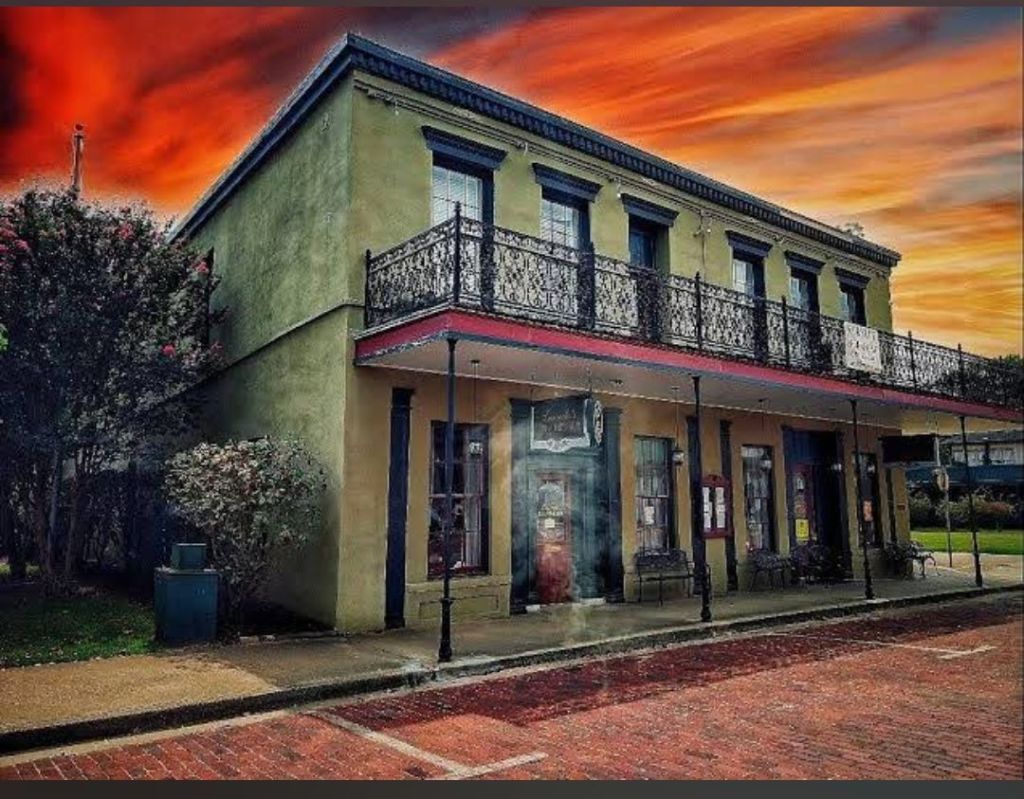
    Tucked away in the piney woods of East Texas, the historic town of Jefferson is home to one of the most chilling and fascinating hotels in the South—the Jefferson Hotel. More than just a place to rest your head, this hotel is an immersive experience for those who crave history, mystery, and perhaps a brush with the paranormal.

    A Walk Through History

    Originally built in the 1850s, the Jefferson Hotel has seen many lives: a cotton warehouse, a speakeasy during Prohibition, a brothel, and finally, a hotel. Jefferson itself was once a bustling river port town, second only to Galveston in the 19th century. The hotel has long been a centerpiece of the town, attracting both history buffs and ghost hunters.

    Over the decades, countless guests have claimed to encounter something… otherworldly. The hotel embraces its haunted reputation, with rooms that are intentionally themed to enhance the eerie vibe—some even feature antique dolls, flickering lanterns, and vintage decor that feels frozen in time.

    Paranormal Legends and Ghostly Tales

    The Jefferson Hotel has been called one of the most haunted places in Texas—and for good reason. Visitors and staff frequently report footsteps in empty halls, doors slamming shut, whispers in the dark, and shadowy figures that vanish upon approach.

    Perhaps the most famous entity is “Judith,” a spirit said to haunt Room 19. According to legend, she was a young woman who took her own life in the room after a broken engagement. Guests in that room have reported cold spots, lights flickering, and even the feeling of being watched.

    There’s also talk of a child ghost who plays in the hallway, phantom music from the 1920s, and a mysterious woman in black who vanishes into walls.

    A Hotel That Leans Into Its Legacy

    What makes the Jefferson Hotel so compelling is how it embraces its supernatural side. Rather than shy away from its haunted past, the hotel leans into it—welcoming ghost hunters, thrill-seekers, and the curious alike. The current owners have restored much of the hotel with care, preserving its historic charm while adding to the immersive, eerie atmosphere.

    Each room is different, many styled with Victorian furniture and subtle (or not-so-subtle) nods to the spirits said to still reside there. Whether you’re spending the night or just taking a tour, it’s hard not to feel the weight of time within its walls.

    Is It All Just Stories?

    Skeptics might dismiss the ghost stories as folklore or suggestible minds at work. But even the most grounded visitors admit to feeling something unusual at the Jefferson Hotel. Whether it’s the creak of old floorboards or something more, the energy is undeniable.

    And maybe that’s the point. The Jefferson Hotel isn’t just about ghosts—it’s about preserving a piece of Texas history in a way that’s immersive, alive, and just a little bit spooky.

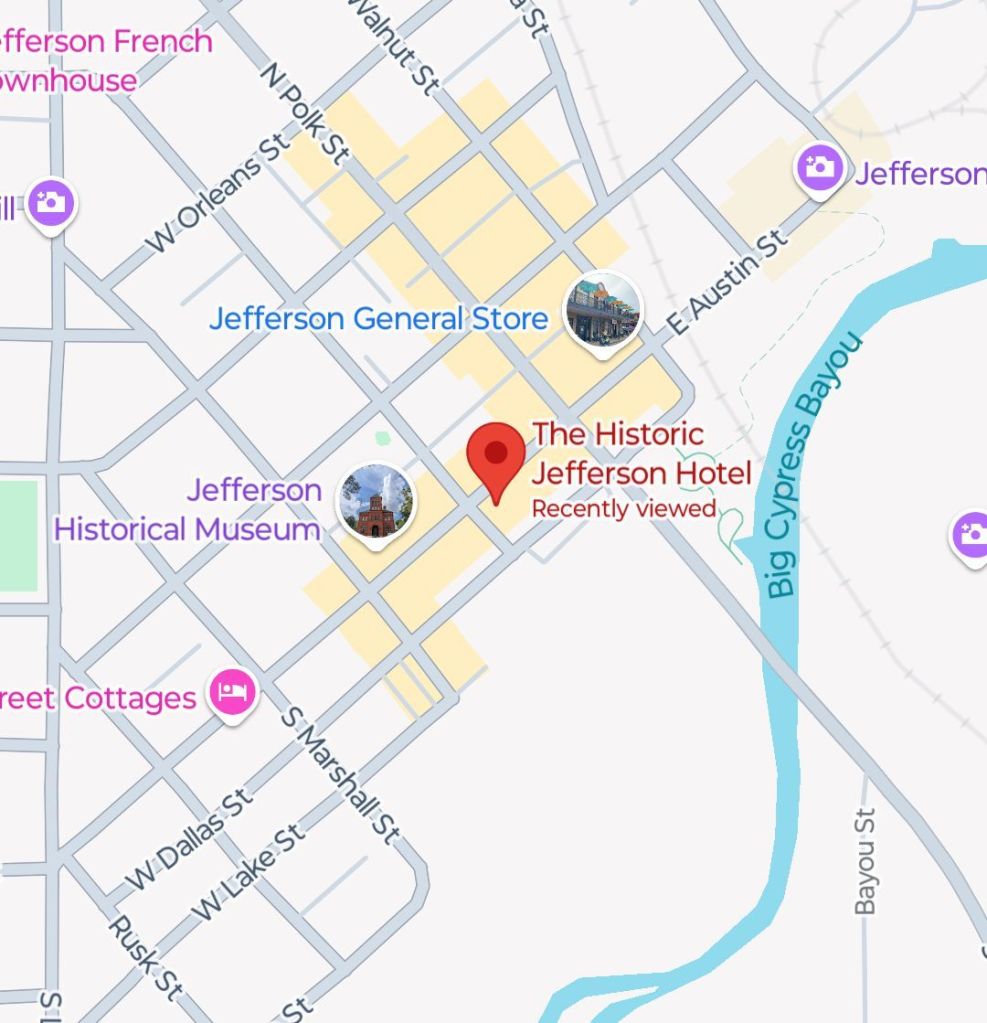
    Google Maps

    Thinking of visiting?
    The Jefferson Hotel is open year-round, and bookings can be made through their website. But be warned—you may not be alone in your room.