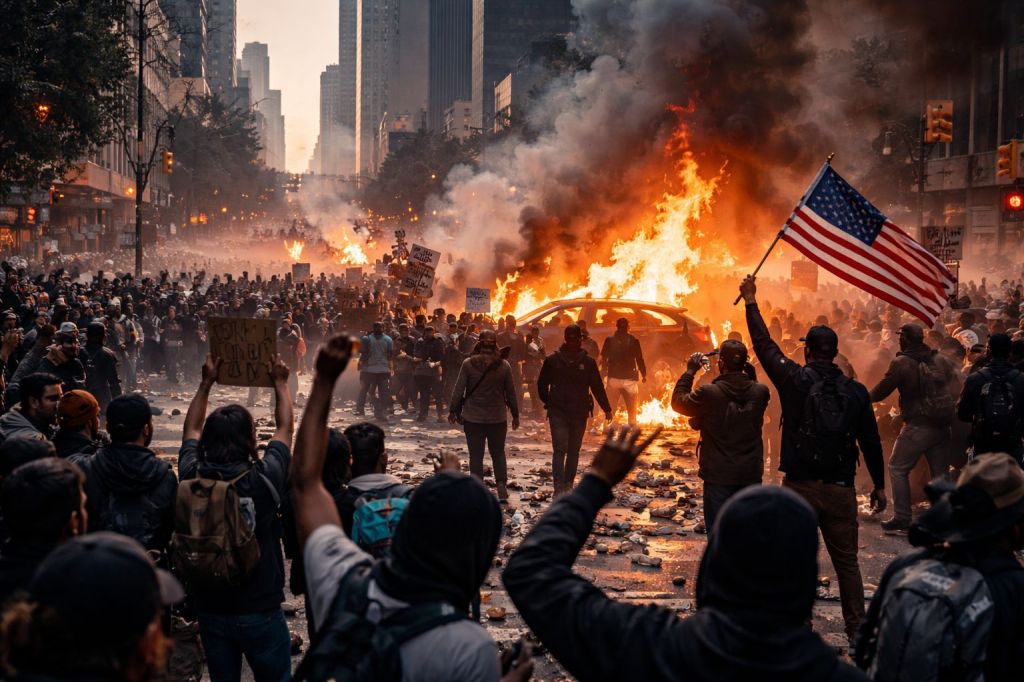
Here’s a comprehensive look at the five most “crime-infested” cities in the United States, using the latest available violent crime data — primarily based on reported incidents per 100,000 people from FBI reports and aggregated rankings. While crime trends can fluctuate year to year, these cities consistently rank among the highest in violent crimes (murder, robbery, assault, etc.). (USAFacts)
1. St. Louis, Missouri
St. Louis often tops lists of U.S. cities with the highest overall crime rates.
- Violent Crime Rate: ~2,082 per 100,000 residents.
- Crime Profile: Includes high rates of assault, robbery, and homicide relative to population.
- Structural issues such as concentrated poverty and strained community–police relations are frequently cited as contributing factors. (World Population Review)
2. Detroit, Michigan
Detroit is another major city with persistently high violent crime.
- Violent Crime Rate: ~2,057 per 100,000 residents.
- Crime Drivers: Elevated levels of aggravated assault, gun violence, and property crimes. Historically, economic decline and depopulation have correlated with spikes in crime. (World Population Review)
3. Baltimore, Maryland
Baltimore consistently ranks among the most violent U.S. cities.
- Violent Crime Rate: ~2,027 per 100,000 residents.
- Crime Features: High rates of homicide and robbery, with concentrated crime in certain neighborhoods. The city has also seen ongoing efforts to increase policing and community programs to address violence. (World Population Review)
4. Memphis, Tennessee
Memphis has one of the nation’s highest violent crime rates for larger cities (100,000+ population).
- Violent Crime Rate: ~2,003 per 100,000 residents.
- Additional Details: Memphis has historically had among the highest violent crime and homicide rates in the U.S., although recent law enforcement interventions have been targeted at reducing violent crime surges. (World Population Review)
5. Little Rock, Arkansas
While smaller than the other cities on this list, Little Rock has high per-capita crime figures.
- Violent Crime Rate: ~1,634 per 100,000 residents.
- Crime Context: Little Rock’s high ranking reflects elevated rates of robbery and aggravated assault relative to its population. (World Population Review)
Important Context on Crime Data
Violent vs. Property Crime
- Violent crime includes murder, rape, robbery, and aggravated assault.
- Property crime includes burglary, larceny, and motor vehicle theft (not shown above but also important in broader crime profiles).
- For example, nationwide property crime rates have been reported separately, and cities like Oakland, California, have among the highest property crime rates (e.g., ~7,230 per 100,000 people). (USAFacts)
National Trends
- According to FBI data, violent crime overall in the U.S. declined in 2024, with a notable drop in homicides and property crime rates nationwide — though local patterns vary widely by city. (AP News)
Why These Cities Rank High
Cities with high crime rates often share complex socio-economic challenges, such as:
- High poverty rates
- Income inequality
- Concentrated disadvantage in certain neighborhoods
- Historical disinvestment
- Challenges with policing and community relations
These factors intersect with crime statistics but do not fully explain them on their own — meaningful safety improvements typically involve long-term policy efforts, community investment, and multi-agency cooperation.
Conclusion
While crime rates can vary year by year, St. Louis, Detroit, Baltimore, Memphis, and Little Rock continue to appear at or near the top of national violent crime rate rankings in recent U.S. statistics, with rates well above national averages. (USAFacts)
Here’s a detailed overview of U.S. states with sanctuary policies, the sanctuary cities within them, and the key challenges these jurisdictions are facing today — based on federal government listings, policy analyses, and current news coverage.
Which States Are Officially Recognized as Having Sanctuary Policies?
According to a U.S. Department of Justice (DOJ) sanctuary jurisdictions list, the following states have laws, ordinances, or practices that impede federal immigration enforcement (often characterized by refusing or limiting cooperation with Immigration and Customs Enforcement — ICE):
California, Colorado, Connecticut, Delaware, District of Columbia, Illinois, Minnesota, Nevada, New York, Oregon, Rhode Island, Vermont, Washington. (Department of Justice)
Note: Some other sources assert slightly different lists because “sanctuary” is not a legal term — it broadly refers to jurisdictions that limit local cooperation in federal immigration matters. (American Immigration Council)
Major Sanctuary Cities by State
Sanctuary cities are local governments (cities or counties) that adopt policies limiting cooperation with federal immigration authorities. These are commonly found in the states above:
- California: Los Angeles, San Francisco, San Diego (listed though disputed), Berkeley. (Department of Justice)
- Illinois: Chicago, Cook County. (Department of Justice)
- New York: New York City, Rochester. (Department of Justice)
- Colorado: Denver. (Department of Justice)
- Massachusetts: Boston. (Department of Justice)
- New Jersey: Hoboken, Jersey City, Newark, Paterson. (Department of Justice)
- Pennsylvania: Philadelphia. (Department of Justice)
- Oregon: Portland. (Department of Justice)
- Washington: Seattle. (Department of Justice)
Thousands of smaller jurisdictions also have some form of sanctuary policies, though definitions vary widely. (CIS.org)
Key Problems and Controversies in Sanctuary Jurisdictions
Sanctuary cities — and the states that host them — face a range of major challenges that are frequently discussed in public policy debates:
1. Legal and Federal Enforcement Conflicts
The DOJ and Department of Homeland Security have repeatedly challenged sanctuary laws in court, arguing they “obstruct” federal immigration enforcement. For example:
- Minnesota (including Minneapolis & St. Paul) was sued by the DOJ for policies that allegedly interfere with federal immigration enforcement. Federal authorities claim these allow undocumented immigrants to avoid legal processes. (AP News)
- New York City has been sued for similar reasons, with federal officials asserting city policies hinder enforcement and pose public safety risks. (The Washington Post)
These legal battles create costly litigation and political friction between state/local governments and the federal government.
2. Strain on Housing and Public Services
Large sanctuary cities, especially those with long-standing immigrant populations, have struggled with housing crises and shelter system overloads:
- New York City is experiencing a prolonged migrant housing crisis, driven by influxes of asylum seekers. This has strained shelters and sparked political controversy over housing policy and resource allocation. (Wikipedia)
Homelessness — sometimes correlated with immigration patterns — also stresses local services like emergency shelters, health care access, and social supports. (USAFacts)
3. Public Safety and Crime Debates
Critics of sanctuary policies argue that refusing to honor ICE detainers (requests to hold individuals for immigration processing) can release individuals who might reoffend. For instance:
- Federal officials have claimed that sanctuary practices leave “dangerous criminals” on the streets — a key argument behind lawsuits against Minnesota and NYC. (AP News)
However, scholars and immigration advocates dispute this assertion.
Studies have found no consistent evidence that sanctuary policies increase crime rates and, in some analyses, crime was lower in sanctuary jurisdictions compared with similar areas without such policies. (NILC)
This clash between federal claims and academic data reflects a broader national debate on immigration enforcement and local autonomy.
4. Political and Budgetary Pressures
Sanctuary jurisdictions often face political backlash and potential federal funding threats:
- Louisville, Kentucky, ended its sanctuary city policies after federal pressure and warnings about federal funding consequences — showing how political power can affect local policy. (New York Post)
Cities and states navigating these pressures must balance local priorities against potential financial penalties and federal scrutiny.
Why These Issues Arise
Sanctuary policies are rooted in a distinction between local policing priorities and federal immigration enforcement, which is constitutionally a federal function. Local jurisdictions generally retain the discretion not to assist federal agencies, but federal officials — especially under recent administrations — have pursued aggressive strategies to counter sanctuary measures. (American Immigration Council)
The result is a patchwork of laws and intense policy debates, with significant implications for:
- public safety,
- municipal budgets,
- immigrant communities,
- federal–local relations.
Conclusion
States with sanctuary policies — including California, Illinois, New York, Oregon, Colorado, and others — host major sanctuary cities such as Los Angeles, Chicago, New York City, and Portland. These jurisdictions face complex challenges, from federal lawsuits and political pressure to housing crises and contentious debates about crime and public safety. The policy landscape is highly polarized, shaped by competing legal interpretations and differing views on immigration’s social impact.
Sources
- DOJ sanctuary jurisdictions list (2025). (Department of Justice)
- Overview of sanctuary policies and federal–local tensions. (American Immigration Council)
- New York City housing crisis data. (Wikipedia)
- Federal lawsuits over sanctuary policies (Minnesota, NYC). (AP News)
- Academic and policy analyses on crime and sanctuary policies. (NILC)

 The Eden Protocol