The Mothman Incident: West Virginia’s Winged Omen Point Pleasant & the Birth of a Legend (1966–1967)
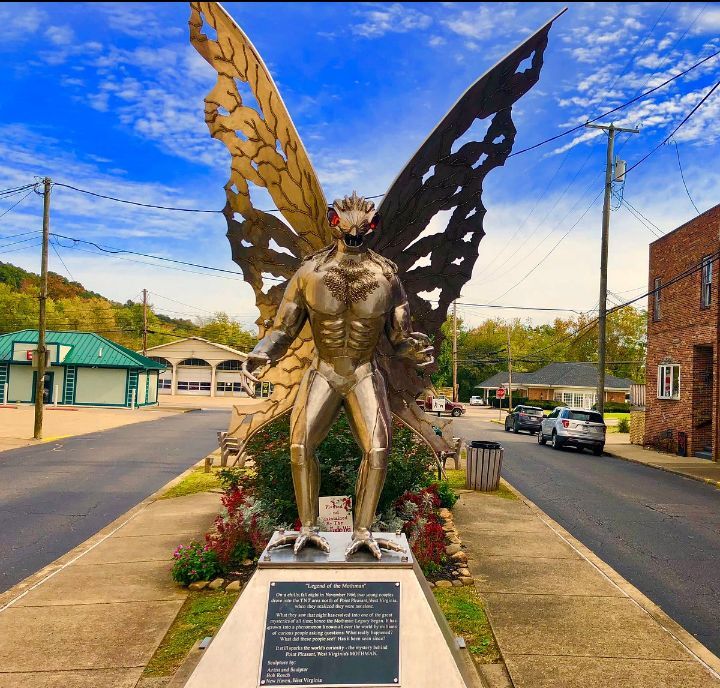
In the quiet Ohio River town of Point Pleasant, West Virginia, a series of strange encounters between November 1966 and December 1967 would give birth to one of America’s most enduring paranormal legends: the Mothman. What began as a handful of frightened eyewitness reports quickly spiraled into national headlines, UFO sightings, Men in Black rumors, and ultimately, tragedy.
The First Sighting: November 15, 1966 The modern legend began when two young couples—Roger and Linda Scarberry, and Steve and Mary Mallette—told police they had encountered a large, winged creature near an abandoned munitions facility known locally as the “TNT Area.” They described: A man-sized figure Large wings folded behind its back Glowing red eyes The ability to rise straight into the air Incredible speed—reportedly keeping up with their car at nearly 100 mph
Local newspapers, including the Point Pleasant Register, picked up the story. The term “Mothman” was reportedly inspired by the popularity of the Batman TV series at the time.
The TNT Area: Ground Zero The TNT Area was a former World War II explosives site filled with concrete igloos, wooded terrain, and abandoned structures—an ideal breeding ground for rumor and fear. Soon after the initial sighting: More residents reported seeing a red-eyed creature. Livestock behaved strangely. UFO sightings increased. Reports of mysterious “Men in Black” visiting witnesses began circulating. Whether these events were connected—or products of collective anxiety—remains debated.
The Year of High Strangeness Between late 1966 and 1967, Point Pleasant became a hotspot for: UFO reports Poltergeist claims Phone interference Strange lights over the Ohio River Some researchers later suggested the region was experiencing a classic “flap”—a wave of paranormal reports clustered in time and place. One of the key investigators was author John Keel, who documented the events in his 1975 book The Mothman Prophecies. Keel believed the creature might be an interdimensional entity or harbinger of disaster.
The Tragedy: Silver Bridge Collapse On December 15, 1967, tragedy struck. The Silver Bridge—connecting Point Pleasant, West Virginia to Gallipolis, Ohio—collapsed during rush hour traffic. 46 people died The cause was later determined to be a structural failure: a fractured eyebar in the suspension chain After the collapse, Mothman sightings abruptly stopped. For many locals, the connection seemed undeniable: Was the creature a warning? An omen? Or simply coincidence layered onto trauma? Explanations: Skepticism vs. Supernatural
黎 The Sandhill Crane Theory Skeptics argue witnesses likely saw a sandhill crane, a large bird with: Red markings around the eyes A wingspan up to 7 feet Rare but possible migration into the area However, critics of this explanation note: Cranes do not typically match the described body proportions. They do not chase cars at high speeds.
️ Psychological & Sociological Factors Others suggest: Cold War anxiety Industrial decay Local folklore Mass suggestion Point Pleasant in the 1960s was a small river town experiencing economic strain. Fear spreads quickly in tight-knit communities.
Paranormal Interpretations Believers propose: A cryptid species An extraterrestrial scout An interdimensional being A prophetic entity linked to disaster The sudden stop in sightings after the bridge collapse remains central to the mystery. Cultural Legacy
In 2002, the legend reached mainstream audiences with the film: The Mothman Prophecies starring Richard Gere Today, Point Pleasant embraces its strange history:
Annual Mothman Festival What began as fear has become identity—and tourism. Why the Mothman Endures The Mothman legend survives because it exists at the intersection of: Small-town Americana Cold War paranoia Grief and tragedy
Archetypal myth Across cultures, winged watchers and omens appear before disaster. Whether one sees the Mothman as monster, metaphor, or misunderstood bird, it speaks to something deeply human: Our need to find meaning in chaos.
Final Reflection Was the Mothman: A cryptid? A collective hallucination? A misidentified crane? A symbolic warning? Or a myth born from tragedy? The bridge fell. The sightings stopped. The story remained. And in the fog rising off the Ohio River, the legend still takes flight.
The Tower of London: A Deep Dive into Britain’s Most Haunted Fortress
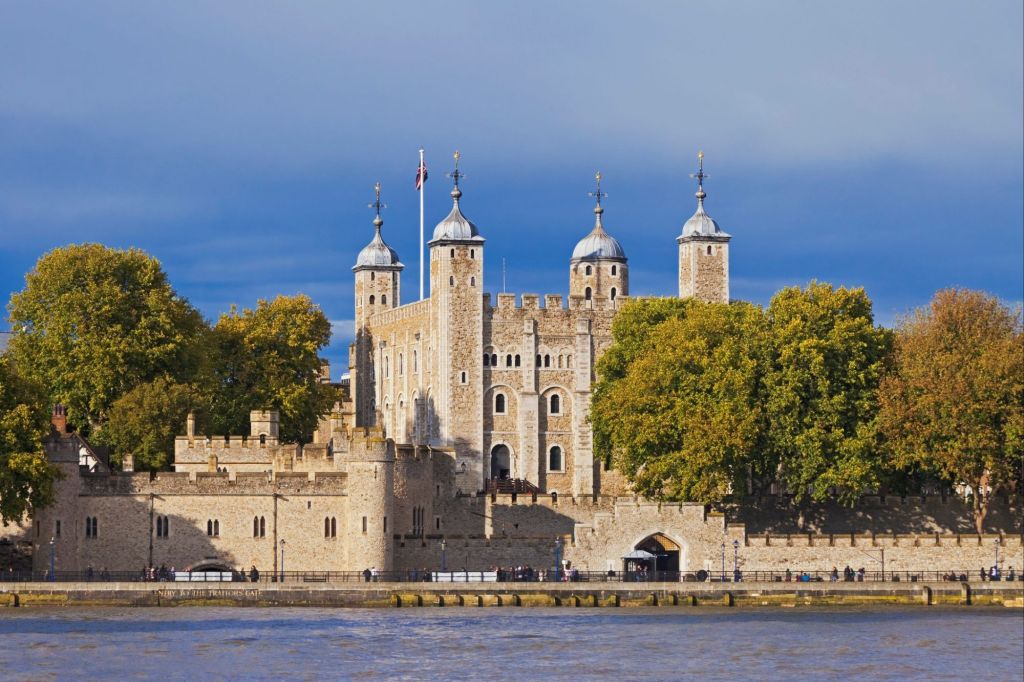
There are places that feel haunted because they’re dark, old, and drafty—and then there’s the Tower of London, a fortress with nearly a thousand years of accumulated fear, ambition, betrayal, and grief sealed into its stones. It’s not just that people say the Tower is haunted; it’s that the building’s very job description, for centuries, was to hold power and punish those who threatened it. If a haunting is a story that clings to a place, the Tower is practically designed to collect them.
What follows is a deep dive into why the Tower became Britain’s most famous ghost magnet: the history that primed it, the specific corners where legends concentrate, the spirits most often reported, and the psychological reasons a place like this can feel supernaturally alive—whether you believe in ghosts or not.
A fortress built to intimidate
The Tower begins with conquest.
After 1066, William the Conqueror needed London not only secured, but reminded—daily—who was in charge. The central keep, now known as the White Tower, was the fortress’s stern heart: thick walls, limited entry points, dominant sight lines. It wasn’t a palace at first so much as a message carved into the skyline: this is Norman authority, made permanent.
Over time, the Tower evolved into a layered complex of walls, towers, gates, inner wards, and later additions—each era stacking new architecture onto old anxieties. It served many roles:
Royal residence (especially early on)
Armory and treasury
Prison, particularly for the high-born and politically dangerous
Execution site, symbolically potent because it made punishment visible and public—yet also secretive when needed
Haunting folklore tends to thrive in places with:
concentrated suffering,
high stakes,
secrecy and rumor, and
strong symbolism.
The Tower has all four.
Why the Tower feels “charged”
Before we talk ghosts, it helps to understand the Tower’s special atmosphere. Visitors describe a kind of pressure there—like the place is watching you back. That sensation comes from a mix of factors:
The geography of dread
The Tower isn’t one building; it’s a maze of thresholds—doors, gates, courtyards, stairwells, passageways. Thresholds are where ghost stories love to live: you step from light into shadow, from open space into stone corridors, from noise into silence.
Layers of story
The Tower is unusually well-documented. The names are known, the dates are known, the accusations and confessions and betrayals are known. When a place has specific victims rather than vague tragedy, the imagination does something powerful: it casts the haunting with real people.
Royal theater
This is crucial. The Tower’s grimness isn’t random violence; it’s state violence—punishment performed as political theater. The emotional residue (if you want to speak metaphorically) isn’t just pain; it’s humiliation, injustice, paranoia, and dread.
Even skeptics admit: if any building can generate “ghost vibes,” it’s one built to make humans feel small and vulnerable under power.
The haunted hotspots inside the Tower
If the Tower is a haunted city, certain neighborhoods dominate the legends.
1) The White Tower
The oldest core is also the most psychologically potent. It’s the “original” Tower: thick Norman walls, narrow stairs, sudden echoes. Reports associated with the White Tower tend to be classic: footsteps, cold spots, unseen presences, and the feeling of being watched.
Because it’s the foundation, it becomes a blank screen for every era’s fears—people project all the Tower’s violence back onto its earliest stone.
2) The Bloody Tower
The name alone does half the haunting work. Whether or not every story attached to it is historically precise, the Bloody Tower has become a symbolic container for one of the Tower’s most famous mysteries: the Princes in the Tower.
This is where the Tower’s haunting isn’t only about tragedy—it’s about uncertainty. Mysteries generate stronger folklore than closed cases because the imagination never stops working. Unresolved stories invite the supernatural as an explanation, or at least as an emotional substitute for justice.
3) Tower Green and the execution narrative
Executions at the Tower weren’t always the public spectacle you picture. Tower Green is infamous because it’s associated with private or semi-private executions, especially those involving high-status prisoners—making the punishment feel both more intimate and more sinister.
The Tower’s haunting reputation is deeply linked to who died there: not anonymous criminals, but queens, courtiers, and heirs. When the victims were close to the crown, the drama intensifies, and so does the legend.
The Tower’s most famous ghosts
Ghost lore at the Tower has a “cast list,” and each spirit functions like a symbol: innocence, ambition, betrayal, doomed youth, broken loyalty. That symbolism is why these stories endure.
Anne Boleyn: the queen who won’t leave
If the Tower has a headline ghost, it’s Anne Boleyn. The legend often depicts her carrying her head under her arm—an image so vivid it almost feels inevitable. She represents the Tower at its most iconic: a place where court politics turn lethal, where a crown can be a trap, where intimacy with power becomes fatal.
Why her story haunts so effectively:
She’s historically famous and emotionally polarizing
Her fall feels like a courtroom drama with life-or-death stakes
Her execution is tied to a very specific place (Tower Green), anchoring the legend to physical ground
Even if you treat the “headless” motif as folklore rather than fact, it’s telling: the Tower’s imagination insists on making her suffering visible.
The Princes in the Tower: the haunting of unanswered questions
The two young princes—Edward V and Richard of Shrewsbury—are less a ghost story than an emotional paradox: innocence caught in a ruthless power struggle, then swallowed by silence. Legends describe apparitions of two children, sometimes seen holding hands, sometimes glimpsed fleetingly on stairs or in corridors.
The true power of this haunting is not gore; it’s absence. The Tower becomes a monument to what cannot be proven, what cannot be undone.
Lady Jane Grey: the tragic “nine days’ queen”
Jane Grey’s legend is ghost-story-perfect: a young person elevated by politics, used as a pawn, and destroyed when the game shifts. Whether or not you believe her spirit appears, the Tower is one of the few places where her story feels physically close—stone and iron holding a life that never really got to begin.
Her haunting symbolizes a specific kind of horror: fate disguised as duty.
The White Lady and other “anonymous” spirits
The Tower’s lore includes figures like a White Lady, and various unnamed presences—guards seeing a figure on a wall walk, vanish, or move where no one should be. These spirits often function like the Tower’s subconscious: not tied to a single headline death, but to the accumulated fear of centuries.
Anonymous ghosts do something important: they suggest the Tower’s tragedy wasn’t exceptional, it was systemic.
The Yeoman Warders, ravens, and ritual: why folklore sticks here
Part of what keeps the Tower’s hauntings alive is that the place is still ritualized.
Yeoman Warders (Beefeaters) aren’t costumed performers in the modern sense; they embody continuity. When a site retains living traditions, it feels less like a museum and more like a working monument—prime ground for legend.
The ravens are more than birds; they’re a symbolic “ward” on the kingdom. That kind of mythic rule (“if they leave, the kingdom falls”) adds supernatural flavor to daily reality.
The Ceremony of the Keys (the nightly locking ritual) reinforces the idea that the Tower’s boundaries are sacred. Boundaries are where hauntings thrive—locked gates, sealed doors, forbidden rooms.
Folklore isn’t just stories told about the Tower. It’s woven into how the Tower is experienced.
The skeptic’s lens: why people see ghosts in the Tower (even if none exist)
You don’t have to believe in spirits to understand why the Tower produces ghost reports.
1) Expectation shapes perception
If you enter a place already primed to think “this is haunted,” your brain does what it always does: it searches for confirming patterns. A creak becomes a footstep. A draft becomes a cold hand. A shadow becomes a figure.
2) The environment is built for misinterpretation
Stone corridors distort sound. Narrow staircases create sudden blind spots. Courtyards amplify echoes. Low light makes depth judgment unreliable. The Tower is essentially an optical and acoustic illusion machine—beautifully, unintentionally.
3) History as “emotional gravity”
In places with heavy histories, people have stronger emotional reactions: awe, dread, sadness, fascination. Those emotions can feel external—like something in the room—because the mind often projects intense feelings outward.
4) Narrative contagion
The more a story is told, the more details become standardized (“a headless queen,” “two children,” “a white-robed woman”), and those details become the template people interpret experiences through. This isn’t dishonesty; it’s how humans make meaning.
In other words: even if the Tower is not haunted, it is a nearly perfect haunting generator.
A place that “haunts” even without ghosts
Here’s the truth at the center of the Tower’s reputation: it doesn’t need literal spirits to haunt you.
The Tower is haunted by:
the fragility of status,
the brutality of political survival,
the way fear becomes policy,
and how quickly public narratives turn human beings into symbols.
That’s why you can stand on a patch of grass inside those walls and feel time collapse—suddenly imagining a person kneeling there, hearing a crowd that isn’t present, sensing a history that feels more like a presence than a record.
Whether you believe in apparitions or not, the Tower of London is a masterclass in how places retain story pressure—and how that pressure becomes legend.
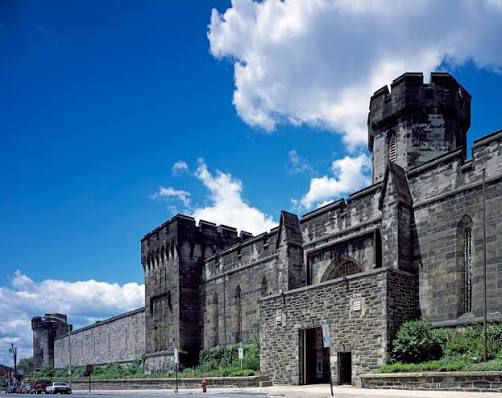
Rising like a crumbling medieval castle in the heart of Philadelphia, Eastern State Penitentiary is more than a historic prison—it’s one of the most infamous haunted locations in the United States. With its decaying cellblocks, looming guard towers, and long corridors of shadow, the penitentiary has become a focal point for paranormal lore, ghostly encounters, and psychological unease that lingers long after the gates closed.
A Radical Experiment in Isolation
Opened in 1829, Eastern State Penitentiary was revolutionary—and terrifying—for its time. Built on the “Pennsylvania System,” inmates were kept in total solitary confinement, sometimes for years. Prisoners were hooded when moved, forbidden to speak, and left alone with only a Bible and their thoughts. The intent was moral reform through reflection. The result, according to historical records, was often mental collapse.
Charles Dickens visited in 1842 and condemned the practice, writing that the system inflicted “immeasurable torture and agony.” Many prisoners suffered hallucinations, paranoia, and insanity—conditions that modern psychologists now associate with prolonged isolation.
That psychological suffering is central to why many believe Eastern State is haunted.
Cells That Refuse to Stay Silent
Visitors and investigators consistently report strange phenomena throughout the prison, especially in Cellblocks 4, 6, 8, and 12:
Disembodied whispers echoing through empty corridors
Footsteps where no one is present
Shadow figures darting across cells or standing at the ends of hallways
Sudden cold spots, even during summer months
Laughter and crying heard late at night
Cellblock 12 is particularly notorious for reports of a dark, human-shaped shadow that appears and vanishes without sound. Cellblock 4 has been associated with faces appearing in cell walls and voices calling out to visitors by name.
Former guards and staff have gone on record describing feelings of dread, panic, or being watched—sometimes refusing to work certain areas alone.
The Infamous Al Capone Cell
One of the most famous inmates was Al Capone, who served time at Eastern State in 1929. Unlike the grim conditions most prisoners endured, Capone’s cell was lavishly furnished with rugs, fine furniture, artwork, and even a radio.
Despite the comfort, Capone reportedly suffered from paranoia and insomnia while imprisoned there. Some visitors claim to feel a heavy presence in or near the cell—less violent, more oppressive—suggesting that wealth and power offered no real escape from the prison’s psychological grip.
Residual Hauntings or Something More?
Paranormal investigators often debate whether Eastern State is home to residual hauntings—emotional echoes replaying traumatic moments—or intelligent entities capable of interaction. EVPs (electronic voice phenomena), unexplained light anomalies, and motion-triggered events have been documented during investigations.
Skeptics argue that the power of suggestion, combined with the prison’s dark history and unsettling architecture, can explain many experiences. Believers counter that the consistency of reports across decades—and from people unaware of the legends—points to something deeper.
What’s undeniable is the atmosphere. Eastern State feels charged. The silence is heavy. The walls seem to absorb sound—and perhaps memory.
A Living Ruin
Eastern State Penitentiary closed in 1971 and now stands as a preserved ruin, offering daytime tours focused on criminal justice reform and nighttime events that lean into its haunted reputation. Whether approached as history, psychology, or paranormal mystery, the site leaves a profound impression.
Some visitors leave thrilled. Others leave shaken. A few claim they don’t leave entirely alone.
Eastern State Penitentiary remains a monument to human suffering, flawed ideals, and unanswered questions—where the line between past and present feels dangerously thin.
The Ouija Board: A Gateway to the Spirit World or a Harmless Parlor Game?
The Ouija board has long been a subject of fascination, fear, and debate. Some believe it is a tool for communicating with spirits, while others see it as nothing more than a psychological phenomenon or a harmless board game.
Whether you consider it a portal to the unknown or just a spooky pastime, the Ouija board remains one of the most controversial and intriguing objects in the realm of the supernatural.
The Origins of the Ouija Board
While spirit communication has been practiced for centuries, the modern Ouija board first appeared in the late 19th century, during a time when spiritualism was at its peak.
Key Historical Points:
The Fox Sisters of New York gained fame in the 1840s for their alleged ability to communicate with spirits. Their séances and “spirit rapping” sparked widespread interest in contacting the dead.
In 1890, a businessman named Elijah Bond patented the first commercially produced talking board, which later became known as the Ouija board.
The name “Ouija” supposedly came from the board itself, spelling out its own name when Bond and his friends asked what it should be called.
By 1901, the Ouija board was being mass-produced by the Kennard Novelty Company, later taken over by Parker Brothers and eventually Hasbro, which still owns the rights today.
How the Ouija Board Works
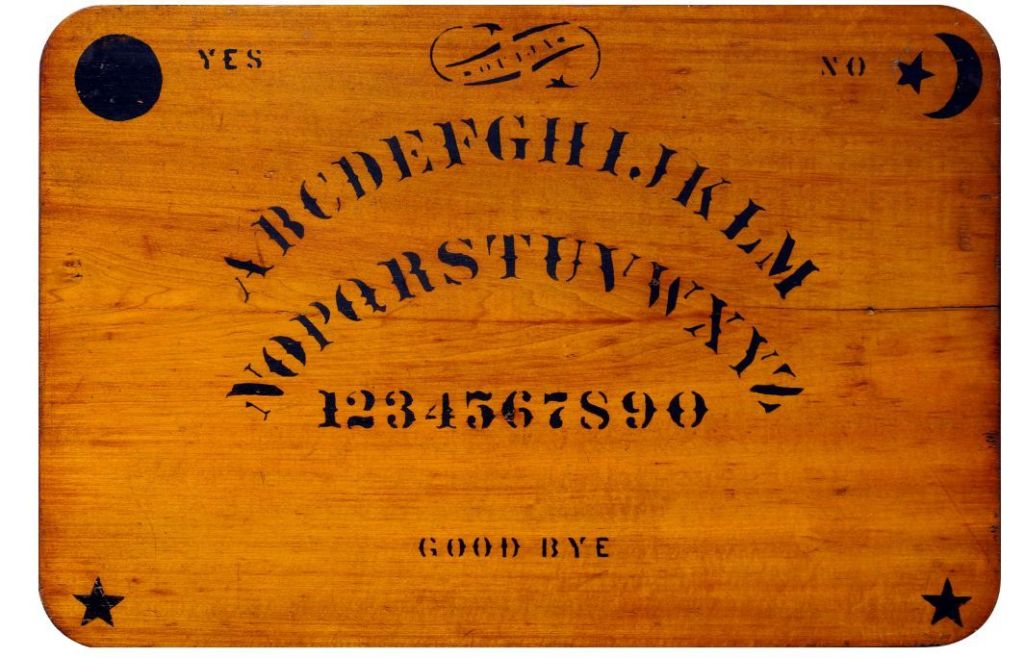
A typical Ouija board consists of:
A flat board with the letters A–Z, numbers 0–9, “YES” and “NO”, and sometimes “GOODBYE”.
A planchette (a small, heart-shaped device) that participants rest their fingers on.
Users ask questions, and the planchette moves to spell out answers. But is this movement truly spirits communicating, or is there a scientific explanation?
Scientific Explanations: The Ideomotor Effect
Skeptics believe that the Ouija board is not supernatural, but rather an example of the ideomotor effect—a psychological phenomenon where small, unconscious muscle movements cause the planchette to move.
Evidence Against the Supernatural Theory:
Blindfolded participants often produce gibberish when using the board, suggesting the movement is subconscious rather than guided by spirits.
Studies show that when people believe they are communicating with a supernatural force, their expectations influence the responses.
Many scientists argue that the Ouija board is simply a psychological tool that reveals the subconscious mind, rather than a means of speaking to the dead.
The Paranormal Perspective: A Gateway to the Unknown
Despite scientific skepticism, many paranormal believers insist that the Ouija board is a real tool for spirit communication.
Common Paranormal Claims:
Spirits can use the board to answer questions, spell names, and provide information.
The board can summon dangerous entities, including malevolent spirits and demons.
Many users report experiencing strange occurrences after a session, such as unexplained noises, objects moving, or eerie visions.
Some even believe that using the Ouija board improperly—such as failing to say “GOODBYE” at the end of a session—can invite unwanted spiritual attachments.
Famous Ouija Board Stories
The Patience Worth Case (1913)
A woman named Pearl Curran claimed to channel a spirit named Patience Worth through the Ouija board. Over time, Patience “dictated” entire books and poems, many of which were historically accurate and highly detailed, leading some to believe Pearl was truly communicating with a ghost.
The Exorcist Connection
The 1973 film The Exorcist was inspired by a real-life case of demonic possession. The victim, a young boy, allegedly became possessed after using a Ouija board, fueling fear and superstition around the board’s dangers.
The Zozo Phenomenon
Many users have reported encounters with an entity named Zozo, a spirit that allegedly appears frequently in Ouija sessions. Those who claim to have contacted Zozo report violent mood swings, disturbing visions, and even physical harm after their encounters.
Ouija Board Safety: Should You Use One?
For those who are curious but cautious, paranormal experts suggest the following Ouija board rules:
1. Never use the board alone—spirits allegedly prey on isolated individuals.
2. Always say “GOODBYE” before ending a session.
3. Avoid asking about death, the future, or specific dates, as this could invite negative energy.
4. Do not use the board in graveyards, abandoned buildings, or locations known for paranormal activity.
5. If the planchette moves toward the four corners of the board, close the session immediately—some believe this is a sign of a negative entity.
While skeptics dismiss these warnings as superstition, those who believe in the supernatural take them very seriously.
Final Thoughts: Paranormal Tool or Psychological Trick?
The Ouija board remains one of the most mysterious and controversial objects in history. Whether it’s a genuine gateway to the spirit world or just a reflection of our own subconscious, it continues to captivate, terrify, and intrigue people worldwide.
And, here, I’ll add a personal experience. It took place in the early 1990’s. I went to a party held by a close friend. The night abruptly ended when a few of us sat around a ouija board and started to ask questions. The question was, “Is anyone here?”
The phone immediately rang. When my friend picked up, no answer. She hung up.
We were all spooked, then asked again. The lights flickered. We were done for the night. Each of us terrified, but left wondering with no answers.
So, is the Ouija board a harmless game, a tool for self-exploration, or something far more sinister?
The only way to know for sure is to ask the board yourself—but be careful what you wish for.
The Ouija board, the summoning of spirits, and the Witch of Endor from the Book of Samuel
The Ouija Board, Spirit Summoning, and the Witch of Endor: A Biblical and Spiritual Deep Dive
1. The Ancient Fascination with the Unseen
Since humanity’s earliest days, people have sought contact with the unseen world. From Mesopotamian necromancy tablets to Greco-Roman oracles, the human longing to pierce the veil between life and death has remained constant. In every age, the methods differ—but the motivation is the same: to receive knowledge, power, or comfort from beyond.
In the modern era, this curiosity found new form through the Ouija board—a tool marketed as a “talking board” but often associated with occult practices and the summoning of spirits.
2. The Ouija Board: Origins and Illusion
The Ouija board emerged during the 19th-century spiritualist movement in America. Spiritualism, popularized in the 1840s by the Fox sisters, taught that the dead could communicate with the living through mediums, knocks, or written messages. The Ouija board was patented in 1891 as a parlor game—its name supposedly derived from the Egyptian word for “good luck” (a myth), or more likely from the French and German words for “yes” (“oui” and “ja”).
A typical board features the alphabet, numbers 0–9, and the words “yes,” “no,” and “goodbye.” Participants rest their fingers on a planchette, which seems to move autonomously to spell out messages. Scientists attribute this movement to the ideomotor effect—unconscious muscular action influenced by suggestion and expectation. However, countless users describe experiences far beyond psychology: voices, possession, unclean presences, and accurate predictions that defy natural explanation.
What began as a “game” quickly gained a sinister reputation among Christian and occult communities alike.
3. The Biblical View of Spirit Summoning
In Scripture, any attempt to contact the dead—or to seek knowledge through mediums, necromancers, or familiar spirits—is strictly forbidden. God’s Word declares:
> “There shall not be found among you anyone who… practices divination or tells fortunes or interprets omens, or a sorcerer or a medium or a necromancer or one who inquires of the dead.” — Deuteronomy 18:10–11 (ESV)
The reason is not merely moral but spiritual: such practices open doors to deception by unclean spirits masquerading as the dead. Satan’s purpose has always been to counterfeit divine truth, offering forbidden knowledge in exchange for allegiance or curiosity. These encounters, rather than reaching deceased loved ones, often invite demonic impersonators.
4. The Witch of Endor: A Case Study in Forbidden Contact
The most striking biblical example of necromancy appears in 1 Samuel 28. After God’s prophet Samuel dies, King Saul faces the Philistine army. Having been rejected by God for his disobedience, Saul finds that the Lord no longer answers him by dreams, prophets, or Urim (sacred lots). Desperate for guidance, he disguises himself and visits a medium in Endor—the “Witch of Endor.”
Saul asks her to summon Samuel’s spirit. The woman complies reluctantly, and to her shock, “she saw Samuel” rising from the earth, wrapped in a robe. The prophet’s message is grim: he confirms Saul’s doom, declaring that the kingdom will fall and Saul and his sons will die in battle.
The most profound part of this story is the woman, (although she claimed to have authority over spirits) was completely taken by surprise and terrified when it happened.
Interpretation and Debate
Theologians debate whether the apparition was truly Samuel or a demonic impersonation permitted by God. The text presents it ambiguously but emphasizes the forbidden nature of the act. The larger moral is clear: Saul’s downfall stems not only from disobedience but from turning to forbidden spiritual sources after God’s silence. His act of necromancy seals his spiritual ruin.
5. Modern Parallels: The Ouija as a Digital Witch of Endor
The Ouija board functions as a modern equivalent to the Witch of Endor’s séance—a device through which the curious seek voices from the unseen realm. Both involve:
A desire for guidance apart from God.
Invocation of unknown spiritual entities.
Illusions of control over powers that ultimately deceive the practitioner.
While the Witch of Endor scene ends in tragedy, many modern Ouija users similarly report psychological torment, hauntings, and oppression following their sessions. The pattern mirrors Saul’s story—seeking truth in darkness when divine silence seems unbearable.
6. Spiritual Discernment: Light vs. Shadows
From a biblical worldview, all spirit communication falls into one of two categories:
1. Divine revelation, through God’s Spirit and His Word.
2. Deceptive imitation, through spirits of falsehood seeking to lead astray.
The Holy Spirit offers wisdom, conviction, and truth grounded in Scripture. The spirits contacted through occult means, by contrast, offer fascination, confusion, and fear. As Paul warns:
> “Even Satan disguises himself as an angel of light.” — 2 Corinthians 11:14
Thus, while the Ouija board may appear harmless or entertaining, it represents a portal of spiritual disobedience—a reenactment of Saul’s tragic choice to consult the forbidden.
7. The True Source of Revelation
In contrast to the deceptive whispers of spirits, Jesus Christ stands as the true mediator between God and humanity (1 Timothy 2:5). He conquered death itself, rendering communication with the dead unnecessary and dangerous. Where Saul sought Samuel, the believer seeks the Holy Spirit, who speaks not from the grave but from heaven.
Christ’s victory at the cross exposes the futility of necromancy and all occult pursuits:
> “He disarmed the rulers and authorities and put them to open shame, by triumphing over them in him.” — Colossians 2:15
8. Conclusion: The Warning of Endor
The Witch of Endor stands as a solemn warning to every generation. Whether through ancient necromancers or modern “talking boards,” the temptation to reach beyond God’s boundaries endures. The Ouija board, like Endor’s ritual, is not a toy—it is an invitation to spiritual deception.
Saul’s tragedy reveals that when God’s silence tests our faith, the faithful must wait upon His light, not seek counsel from shadows. The line between curiosity and corruption is thin—and across it waits a realm eager to answer, but never to save.
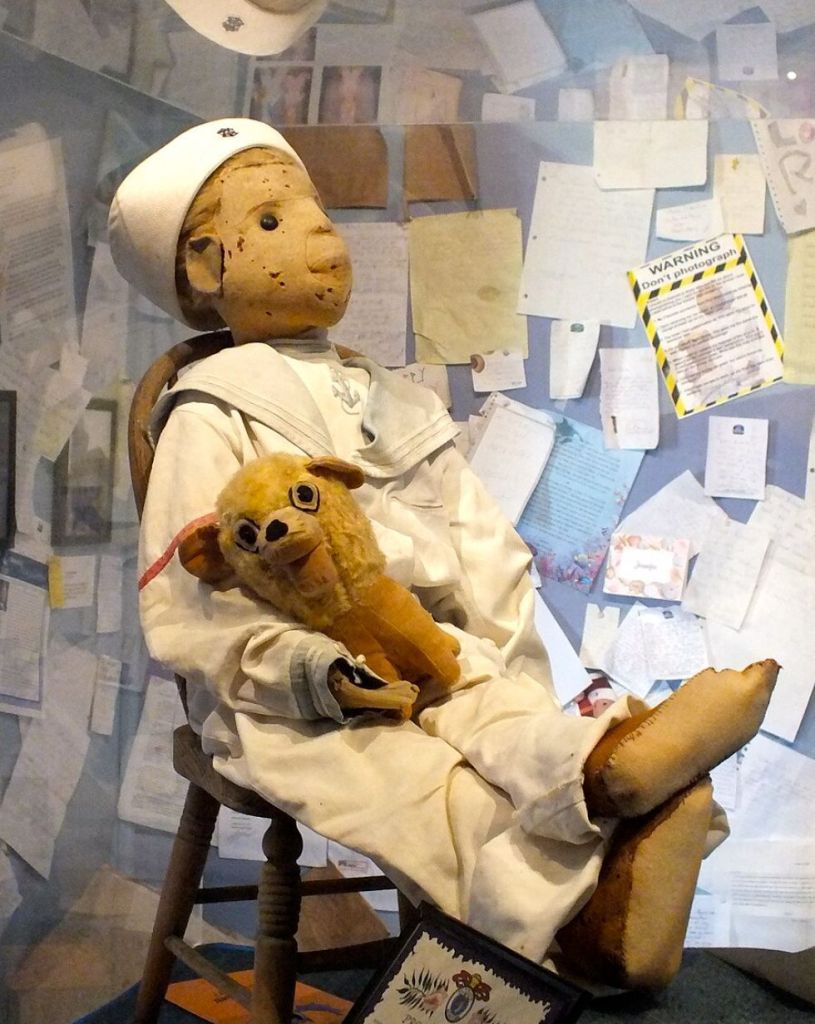
Robert the Doll: The Terrifying Tale of Key West’s Haunted Figure
Among the world’s most infamous haunted objects, Robert the Doll holds a sinister reputation. Housed in the Fort East Martello Museum in Key West, Florida, Robert is said to be cursed, responsible for bringing misfortune, accidents, and even death to those who mock or disrespect him. Unlike Hollywood’s portrayal of haunted dolls like Annabelle, Robert’s real-life legend is even more unsettling, with countless eerie stories surrounding him.
The Origins of Robert the Doll
Robert Eugene Otto, often called Gene, was a young boy living in Key West in the early 1900s. According to legend, Robert the Doll was gifted to Gene by a Bahamian servant, who may have practiced voodoo or dark magic.
Soon after receiving the doll, Gene’s parents noticed strange occurrences:
Gene was often heard speaking to Robert—and a deep, unknown voice would respond.
The family reported objects moving on their own and unexplained giggling echoing through the house.
Gene would blame mysterious misfortunes on Robert, often saying, “Robert did it.”
Neighbors claimed to see Robert moving from window to window when no one was home.
A Lifelong Connection
Gene grew up but kept Robert by his side, treating him as a lifelong companion. When he became an artist and moved into the Otto family mansion, he even gave Robert his own room in the attic, furnished like a small bedroom.
Visitors to the house reported hearing footsteps, eerie laughter, and whispering from Robert’s attic room. Some claimed the doll’s expression would change, or that it would appear in different locations despite no one moving it.
Even after Gene’s death in 1974, Robert’s eerie legacy continued.
Robert the Doll’s Museum Home and the Cursed Letters
After Gene’s passing, Robert was donated to the Fort East Martello Museum, where he remains on display inside a glass case. Despite being locked away, Robert’s haunted reputation grew even stronger.
The museum staff and visitors report:
Cameras malfunctioning or breaking when trying to take his picture.
Bad luck, car accidents, job losses, and illnesses affecting those who mock him.
Hundreds of letters sent to Robert each year—many from people begging for forgiveness, believing they had been cursed after disrespecting him.
The letters, which can still be seen at the museum, contain apologies from people who mocked or doubted his powers, hoping to break the streak of misfortune.
Skepticism and Theories
While many believe Robert is truly haunted, skeptics suggest alternative explanations:
Psychological Influence: The power of suggestion may make people believe they are experiencing bad luck after disrespecting Robert.
Childhood Imagination: Gene may have had an active imagination, attributing accidents to his doll.
Museum Myth-Making: Some believe the legend is exaggerated for tourism, as Key West embraces its spooky reputation.
Robert’s Lasting Legacy
Whether one believes in Robert’s supernatural power or not, his eerie presence continues to fascinate and terrify. Unlike many haunted dolls, Robert is not locked away in a secret room—he remains on public display, watching over visitors who dare to approach.
One thing is clear: If you ever visit Robert at the Fort East Martello Museum, it’s best to be polite, ask for permission before taking his picture, and never mock him—or risk becoming another name on his long list of cursed believers.
Nestled in the Rocky Mountains of Estes Park, Colorado, the Stanley Hotel is one of the most famous haunted hotels in the United States. Known as the inspiration for Stephen King’s The Shining, the hotel has a long history of paranormal activity, ghost sightings, and eerie experiences.
From phantom piano music to ghostly children playing in the hallways, the Stanley Hotel remains a bucket list destination for ghost hunters and horror fans alike.
—
The History of the Stanley Hotel
The Stanley Hotel was built in 1909 by Freelan Oscar Stanley, the inventor of the Stanley Steamer automobile. Designed as a luxurious mountain retreat for wealthy travelers, the hotel quickly gained a reputation for its elegance and grandeur.
However, despite its beauty, the Stanley Hotel developed a darker side, with stories of hauntings and supernatural activity reported throughout its history.
—
The Paranormal Activity at the Stanley Hotel
1. The Ghost of Flora Stanley
One of the most famous spirits said to haunt the Stanley Hotel is Flora Stanley, the wife of the hotel’s founder.
Guests and staff report hearing a piano playing in the dead of night, even when no one is there.
Some have even seen a ghostly figure sitting at the piano, believed to be Flora’s spirit.
2. The Fourth Floor: Ghostly Laughter of Children
The fourth floor is said to be the most haunted part of the hotel.
Visitors often hear the sound of children running and laughing in the hallways, though no children are present.
Some have reported tiny handprints appearing on mirrors and windows overnight.
Room 418 is considered one of the most active rooms, with guests reporting beds shaking and strange noises.
3. The Haunted Room 217: The Inspiration for The Shining
Stephen King’s famous horror novel The Shining was inspired by his stay in Room 217.
In 1911, a housekeeper named Elizabeth Wilson was injured in a gas explosion in the room but survived.
Guests now report seeing her ghost, feeling their luggage being mysteriously unpacked, and even experiencing lights turning on and off.
When Stephen King stayed in Room 217, he had a terrifying nightmare about his young son being chased by a malevolent entity—which led to the creation of The Shining.
4. The Shadow Figures and Whispering Voices
Many guests have reported seeing shadowy figures in the hallways and staircases.
Some visitors hear whispers calling their names or disembodied voices having conversations.
—
The Stanley Hotel in Pop Culture
Thanks to Stephen King and The Shining, the Stanley Hotel has become a pop culture icon. While the 1980 movie adaptation directed by Stanley Kubrick was not filmed at the Stanley, the hotel still embraces its haunted reputation by offering:
Ghost tours exploring the hotel’s haunted history.
Special events for paranormal enthusiasts.
A yearly Halloween Masquerade Ball, attracting horror fans from around the world.
—
Final Thoughts: Would You Stay at the Stanley Hotel?
Whether you’re a paranormal investigator, a horror fan, or just a curious traveler, the Stanley Hotel offers an unforgettable experience.
Some guests leave with only great memories, while others leave with ghostly encounters they’ll never forget.
Would you dare spend the night at the Stanley Hotel? Just be sure to keep the lights on!
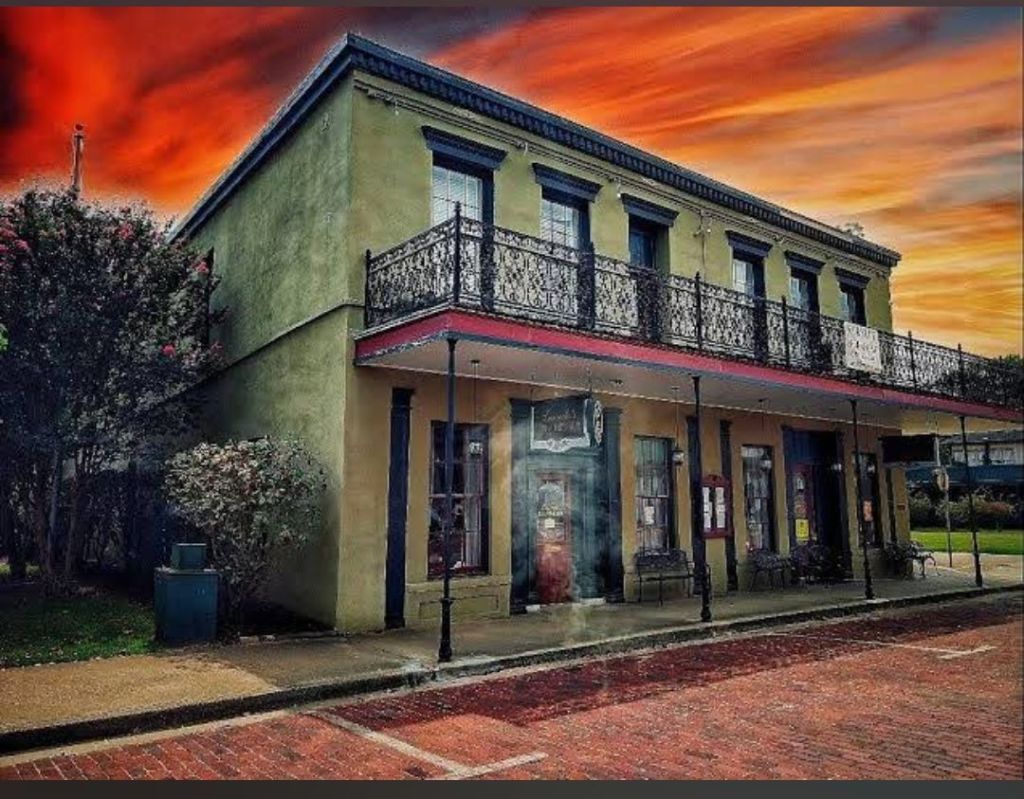
Tucked away in the piney woods of East Texas, the historic town of Jefferson is home to one of the most chilling and fascinating hotels in the South—the Jefferson Hotel. More than just a place to rest your head, this hotel is an immersive experience for those who crave history, mystery, and perhaps a brush with the paranormal.
A Walk Through History
Originally built in the 1850s, the Jefferson Hotel has seen many lives: a cotton warehouse, a speakeasy during Prohibition, a brothel, and finally, a hotel. Jefferson itself was once a bustling river port town, second only to Galveston in the 19th century. The hotel has long been a centerpiece of the town, attracting both history buffs and ghost hunters.
Over the decades, countless guests have claimed to encounter something… otherworldly. The hotel embraces its haunted reputation, with rooms that are intentionally themed to enhance the eerie vibe—some even feature antique dolls, flickering lanterns, and vintage decor that feels frozen in time.
Paranormal Legends and Ghostly Tales
The Jefferson Hotel has been called one of the most haunted places in Texas—and for good reason. Visitors and staff frequently report footsteps in empty halls, doors slamming shut, whispers in the dark, and shadowy figures that vanish upon approach.
Perhaps the most famous entity is “Judith,” a spirit said to haunt Room 19. According to legend, she was a young woman who took her own life in the room after a broken engagement. Guests in that room have reported cold spots, lights flickering, and even the feeling of being watched.
There’s also talk of a child ghost who plays in the hallway, phantom music from the 1920s, and a mysterious woman in black who vanishes into walls.
A Hotel That Leans Into Its Legacy
What makes the Jefferson Hotel so compelling is how it embraces its supernatural side. Rather than shy away from its haunted past, the hotel leans into it—welcoming ghost hunters, thrill-seekers, and the curious alike. The current owners have restored much of the hotel with care, preserving its historic charm while adding to the immersive, eerie atmosphere.
Each room is different, many styled with Victorian furniture and subtle (or not-so-subtle) nods to the spirits said to still reside there. Whether you’re spending the night or just taking a tour, it’s hard not to feel the weight of time within its walls.
Is It All Just Stories?
Skeptics might dismiss the ghost stories as folklore or suggestible minds at work. But even the most grounded visitors admit to feeling something unusual at the Jefferson Hotel. Whether it’s the creak of old floorboards or something more, the energy is undeniable.
And maybe that’s the point. The Jefferson Hotel isn’t just about ghosts—it’s about preserving a piece of Texas history in a way that’s immersive, alive, and just a little bit spooky.
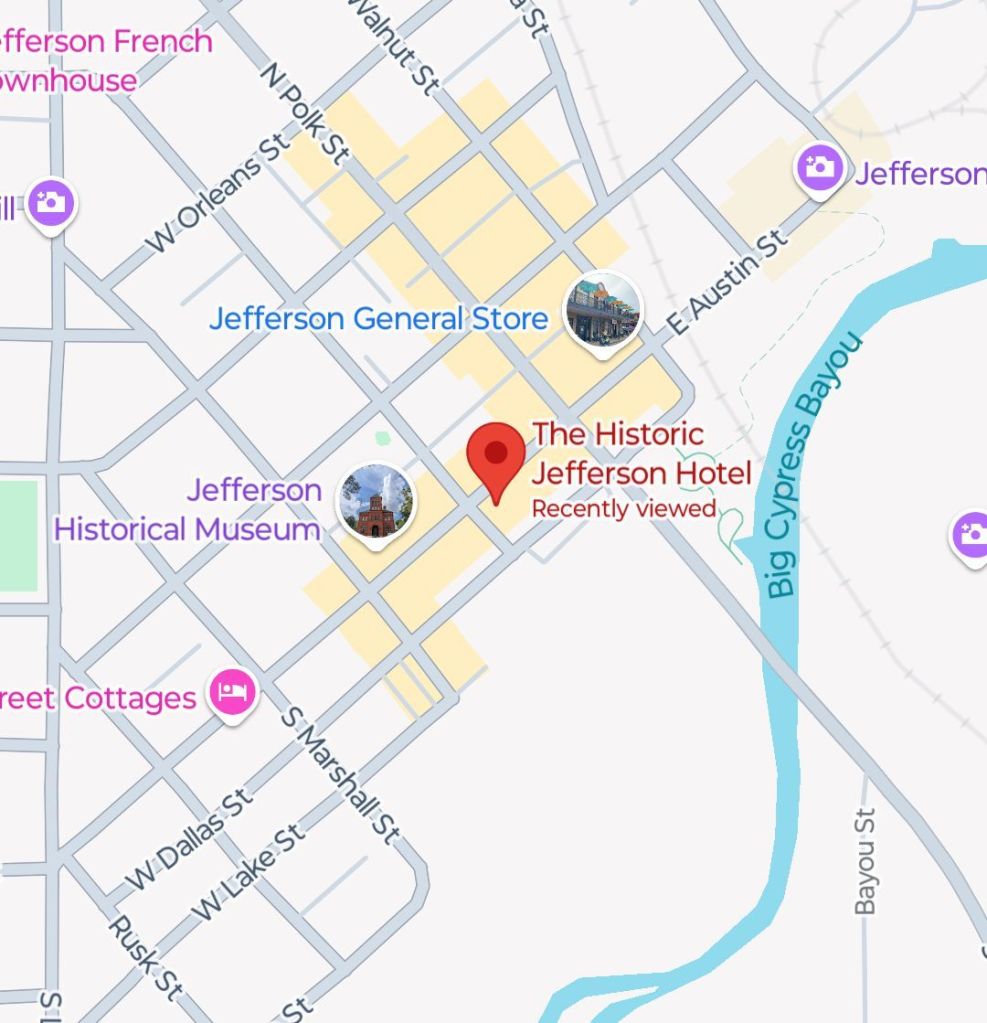
Google Maps
Thinking of visiting? The Jefferson Hotel is open year-round, and bookings can be made through their website. But be warned—you may not be alone in your room.
Deep in the Piney Woods of East Texas, where ancient trees stretch into the mist and time seems to slow, travelers tell of a ghost who walks the roads after dark. Dressed in a flowing white gown, silent and pale, she’s known simply as the Woman in White of Sabine County.
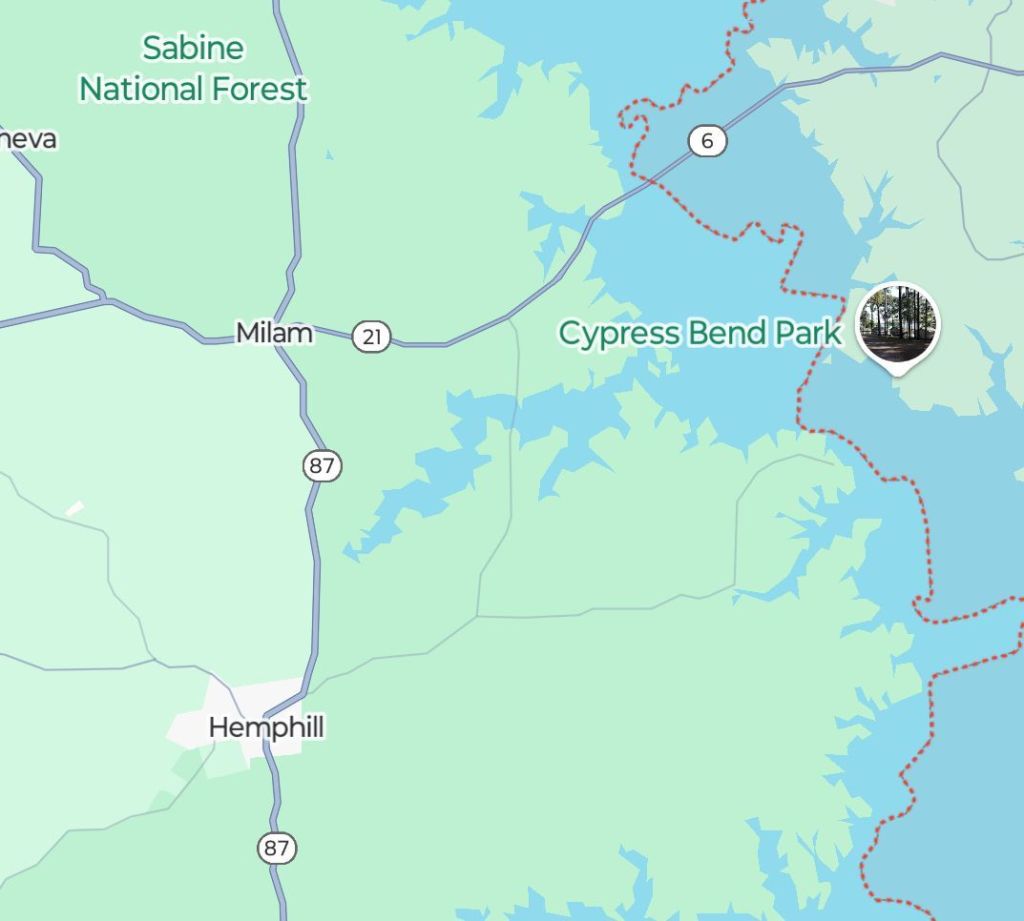
It’s more than just a local legend. Across generations, residents and passersby alike have shared spine-tingling encounters with this mysterious figure. Whether she’s standing roadside near Hemphill or appearing in the rearview mirror on a foggy stretch of farm-to-market road, her presence is unmistakable—and unforgettable.
A Legend Rooted in Mystery
Sabine County, nestled in the piney borderlands near Louisiana, has no shortage of ghost stories. But the Woman in White holds a unique place in local folklore. While no definitive origin story exists, popular theories abound.
Some say she was a bride who died in a carriage accident on her way to the altar, forever trapped in the dress she never wore down the aisle. Others claim she was a settler’s wife who drowned while searching for her lost child—her soul doomed to wander until she finds them. Another tale casts her as a murder victim, buried deep in the forest by someone she trusted.
Despite these conflicting backstories, the encounters all share common threads: she is always alone. Always in white. And always appears before vanishing without a trace.
Firsthand Accounts
Local fisherman Carl M. recounted his 1998 encounter near Milam:
> “It was late, after two in the morning. I saw her standing near the edge of the road—barefoot, white dress, long hair. I pulled over to help, but by the time I stepped out of my truck… she was gone. No footsteps. No sound. Nothing. Just the trees and silence.”
A retired sheriff’s deputy also reported responding to multiple calls in the early 2000s—each describing a woman walking along rural roads in the middle of the night, always vanishing before help arrived.
And then there’s the tale of a delivery driver who claims he picked her up—only to realize halfway through the ride that the back of his van was completely empty.
Where to (Maybe) Find Her
If you’re bold enough to chase the legend, the roads between Hemphill and Milam are ground zero. Locals point to the Old Plainview Road and FM 83 as particularly active areas—especially during cold, foggy nights in late fall or early spring.
Visitors interested in the paranormal can book cabins along the edge of Toledo Bend Reservoir and take a self-guided drive through the ghost roads, or connect with local ghost tour guides who share stories passed down from generation to generation.
Travel Tips for Ghost Seekers
Stay the night: Sabine County is home to several charming inns and rustic lakefront lodges—ideal for late-night ghost hunting or cozy storytelling around the fire.
Pack for the elements: The Piney Woods can be humid, muddy, and cool at night. Bring boots, a jacket, and a flashlight.
Respect the locals and land: Many of the stories are tied to private or rural areas. Stick to public roads and always ask permission when exploring off the beaten path.
Keep an open mind: Whether you’re a believer or a skeptic, the experience of a misty night drive through East Texas woods is unforgettable.
Haunted or not, Sabine County’s Woman in White adds a spectral shimmer to East Texas’s natural beauty and rich folklore. So if your travels bring you to this mysterious corner of the state, keep your eyes on the road—and don’t be surprised if someone… or something… is watching from the trees.



 The Eden Protocol